
Indonesia
Indonesia is the world's largest archipelago, and Bali — the country's best-known destination by a wide margin — is really just one island among more than 17,000. That said, Bali earns its reputation: rice terraces, Hindu temples found nowhere else in Muslim-majority Indonesia, surf breaks, and a wellness-and-yoga scene centered on Ubud that draws visitors who never make it further.
Beyond Bali, the range is vast. Java holds the ancient Buddhist temple of Borobudur and Hindu temple of Prambanan, plus Jakarta's sprawling modern capital energy. Komodo National Park, reached by boat from Bali or Flores, is the only place on Earth to see Komodo dragons in the wild, paired with some of the region's best diving. Sumatra and Sulawesi offer jungle trekking, orangutans, and traditional cultures (the Toraja funeral rites in Sulawesi are genuinely unlike anything else) that see a fraction of Bali's visitor numbers.
Indonesian culture varies enormously by island and ethnicity — over 700 languages are spoken across the country — so "Indonesian culture" as a single idea flattens what's really dozens of distinct traditions sharing a national government. Religion follows the same pattern: majority Muslim nationally, but Hindu in Bali, and a mix of Christian and animist traditions elsewhere.
April-October is the dry season across most of the country and the more comfortable window to visit; the wet season (November-March) brings heavier rain but noticeably fewer crowds and lower prices.
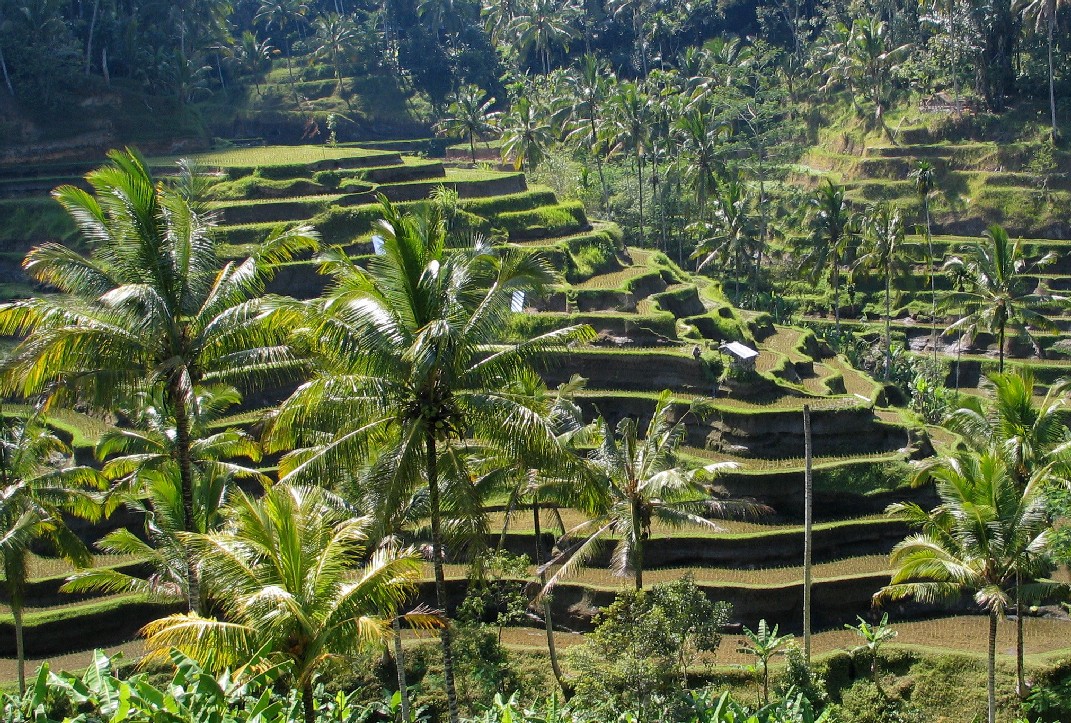
Bali is Indonesia's most famous island, and the one place in the archipelago most travelers build an entire trip around. Come for an unusual range of experience packed into a small area — surf breaks and beach clubs along the south coast, rice-terrace villages and yoga retreats around Ubud, volcano treks and crater-lake temples in the highlands, and a string of black-sand fishing villages along the quieter north and east coasts. Hindu temples, daily offerings, and traditional dance performances give it a culture distinct from the rest of Muslim-majority Indonesia. Most first-time visitors split a week or more between the south coast, Ubud, and one quieter region — Bali rewards slowing down more than it rewards trying to see everything in one trip. Bahasa Indonesia is the local language, though English is widely spoken in tourist areas. Bali is generally safe, but scooter accidents are common (wear a helmet), and swimmers should watch for strong currents on the south and west coasts and mind the monkeys at temples. Tipping isn't required but is appreciated — 5–10% in restaurants without a service charge. Bali, often called the "Island of the Gods," is a sensory feast that seamlessly blends natural beauty, deep spirituality, and vibrant culture. From a tourist’s perspective, it feels like a world unto itself, where ancient traditions coexist with modern luxuries. The island is visually breathtaking, defined by lush, terraced rice paddies that glow emerald green, dense tropical jungles, and dramatic volcanic mountains. The coastlines offer stark contrasts: the west coast boasts world-famous surf breaks and legendary sunsets at cliffside temples like Uluwatu, while the southern peninsula is home to bustling beach clubs and white-sand shores. Culturally, Bali is unique as a Hindu enclave in predominantly Muslim Indonesia. Daily life is steeped in ritual; visitors will encounter fragrant offerings of flowers and incense called canang sari placed on sidewalks, in temples, and on dashboards. The air is often thick with the scent of clove cigarettes and frangipani, punctuated by the mesmerizing, hypnotic sounds of the gamelan orchestra. For tourists, the experience is highly customizable. The town of Ubud is the artistic and spiritual heart, offering yoga retreats, holistic healing, the famous Sacred Monkey Forest, and access to crafts villages. The south—areas like Seminyak and Canggu—caters to those seeking trendy cafes, high-end boutiques, and a lively nightlife scene. Meanwhile, the central highlands around Kintamani or Sidemen offer cooler air and a glimpse into slower, traditional village life. Ultimately, Bali feels like a warm, welcoming place where the locals smile easily, the food is a burst of spice and freshness (think nasi goreng and babi guling), and every day feels touched by a sense of magic and serenity.
East Nusa Tenggara is a scattered, dry-climate archipelago at the far eastern edge of the Indonesian tourist trail, and it looks and feels noticeably different from Bali just a short flight away — browner hills, a majority-Christian population in a majority-Muslim country, and far fewer visitors relative to its scenery. Komodo National Park, straddling Komodo and Rinca islands, is the region's best-known draw: the only place on Earth to see Komodo dragons in the wild, paired with some of Southeast Asia's best diving and snorkeling around Pink Beach and the surrounding reefs. Labuan Bajo, on nearby Flores, is the main gateway town and has grown rapidly as a dive and boat-tour base. Flores itself holds Kelimutu's tri-colored volcanic crater lakes, a genuine geological oddity that changes color over time, plus traditional villages practicing customs found nowhere else in Indonesia. Sumba, further west, is known for elaborate traditional funeral ceremonies, distinctive ikat weaving, and a much less developed tourism infrastructure that rewards travelers seeking somewhere genuinely off the Bali circuit. April-October (dry season) is the most practical window, both for comfort and because many boat trips and treks are weather-dependent.
Java is Indonesia's most populous island and its political and economic core, home to the capital Jakarta and to two of the country's most significant ancient monuments. Borobudur, the world's largest Buddhist temple, and Prambanan, a soaring Hindu temple complex, sit within a short drive of each other near Yogyakarta and are both UNESCO World Heritage Sites — genuinely essential stops for anyone interested in Southeast Asian history. Yogyakarta itself functions as Java's cultural capital, with a still-functioning Sultan's palace, traditional batik and silversmithing workshops, and a lively student-city energy from its large university population. Jakarta, by contrast, is a sprawling, traffic-heavy modern metropolis — worth a day or two for its museums and food scene, but rarely the main reason to visit Java. East Java holds some of the country's most dramatic volcanic scenery: Mount Bromo's otherworldly, moon-like caldera is one of Indonesia's most photographed sunrise viewpoints, and Ijen's blue sulfuric flames (visible only at night) are a genuinely unusual sight found in very few other places on Earth. Java sees a fraction of Bali's tourist volume despite comparable or greater historical significance, which makes it a good add-on for travelers wanting more depth without the crowds. Dry season (April-October) is the more reliable window for volcano treks.
Kalimantan is Indonesia's share of Borneo — the world's third-largest island, split between Indonesia, Malaysia, and Brunei — and it's a genuinely different kind of trip from Bali or Java: rainforest, rivers, and wildlife rather than temples and beaches. Tanjung Puting National Park is the region's best-known destination, reached by a multi-day klotok (traditional houseboat) river cruise that doubles as the accommodation — travelers sleep on deck under mosquito nets while cruising past wild and rehabilitated orangutans, proboscis monkeys, and other wildlife along the riverbanks. It's one of the most reliable places in the world to see orangutans in a semi-wild setting. Beyond Tanjung Puting, Kalimantan's interior holds Dayak indigenous communities with distinct longhouse architecture and traditions, though visiting these areas typically requires more advance arrangement and local guiding than the well-trodden Bali circuit. This is a slower, more logistics-heavy trip than most of Indonesia's tourist islands, and it rewards travelers specifically drawn to wildlife and river travel over beach-and-temple itineraries. Dry season (roughly May-September) gives the most reliable river conditions for cruising.
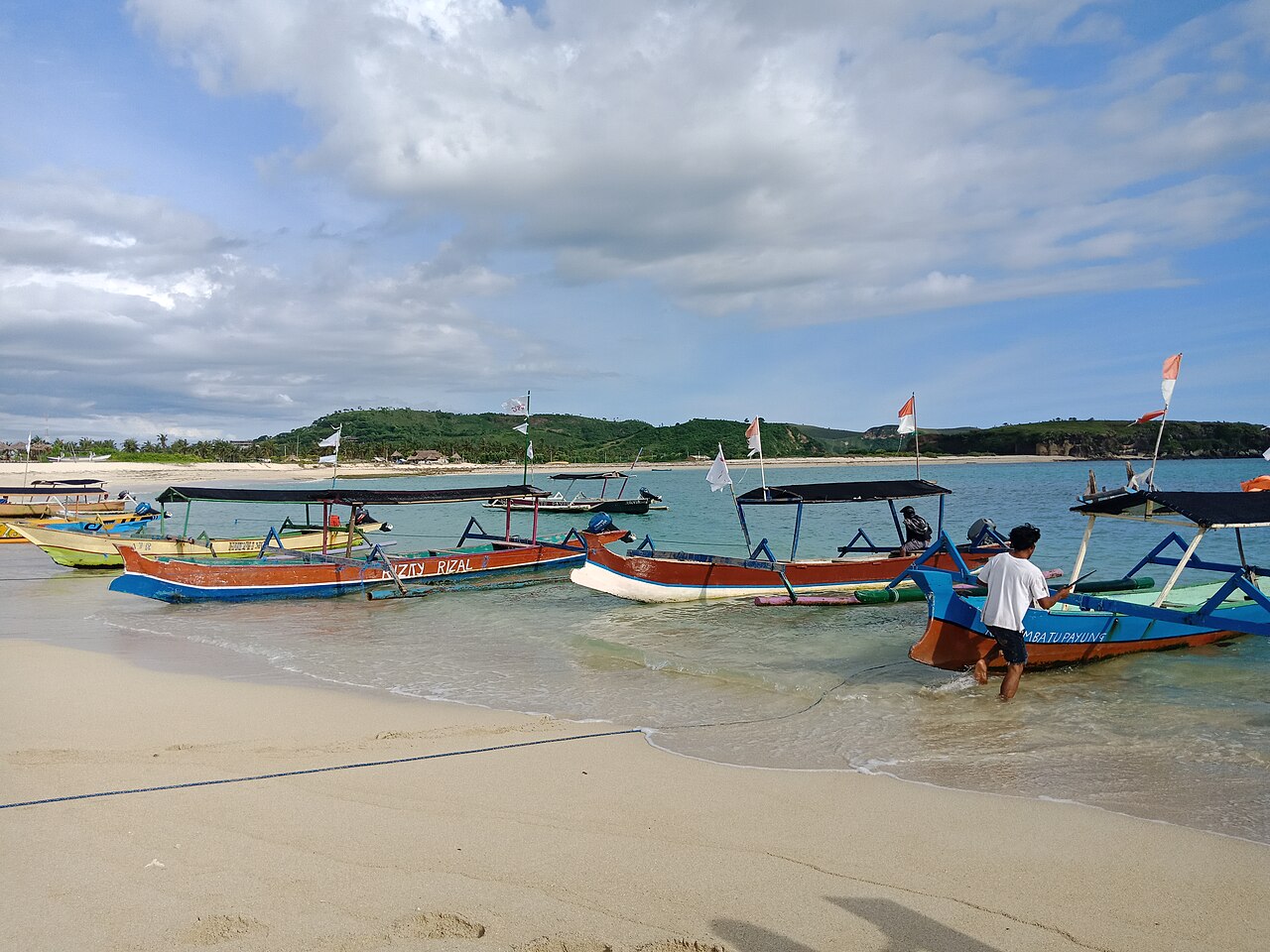
Lombok sits just east of Bali across a narrow strait, and is often pitched as "Bali before Bali got crowded" — similar volcanic and beach scenery with noticeably less development and far fewer visitors, though that gap has been narrowing as Lombok's own tourism infrastructure grows. Mount Rinjani, Indonesia's second-highest volcano, is the island's signature trek — a demanding multi-day climb to a crater lake and, for the fittest, the summit itself, popular with travelers looking for something more physically ambitious than Bali's usual itinerary. Kuta Lombok, on the south coast, has become the island's main surf and beach hub, with a much lower-key vibe than Bali's Kuta despite the shared name. The Gili Islands — Gili Trawangan, Gili Meno, and Gili Air — sit just off Lombok's northwest coast and are car-free, motorbike-free islands reachable only by boat, each with a different personality: Trawangan for nightlife, Meno for quiet seclusion, and Air as a middle ground. All three offer strong snorkeling and diving right off the beach. Lombok is Muslim-majority, unlike Hindu-majority Bali next door, which shows up in local dress norms and the call to prayer rather than temple ceremonies. Dry season (May-September) is the most reliable window for both beach time and the Rinjani trek.
Maluku — the historic Spice Islands — is where nutmeg and cloves originally drove European colonial interest in Indonesia centuries before Bali became a tourist name at all, and the region still carries that layered Portuguese, Dutch, and indigenous history in its forts, churches, and villages. Ambon, the regional hub, holds WWII history and colonial-era forts, but most visitors come for what lies beyond it: Banda Islands, a tiny, historically significant archipelago once fought over by European powers for its nutmeg, now known instead for exceptional, largely untouched diving and a genuinely slow, remote pace of travel. This is one of Indonesia's least-visited regions relative to its history and natural beauty, precisely because reaching it takes real effort — infrequent flights, limited infrastructure, and a lack of the tourist-ready setup found in Bali or Lombok. That's also the appeal for travelers specifically seeking somewhere genuinely off the circuit. Dry season (October-March, opposite the rest of Indonesia due to local monsoon patterns) is generally the better window, though conditions vary by specific island — check locally before planning boat-dependent legs.
Papua is Indonesia's most remote and least-developed major region — the western half of the island of New Guinea, home to rainforest, highland tribal cultures, and a level of biodiversity that draws serious naturalists as much as general travelers. The Baliem Valley, in the highlands, is home to the Dani people and a traditional way of life that remained largely isolated from the outside world until the mid-20th century; visits here typically go through local guides and involve genuine cultural immersion rather than a staged show. The region also holds some of the most linguistically diverse territory on Earth, with hundreds of distinct languages across a relatively small population. Raja Ampat, off Papua's western tip, is internationally recognized as having some of the richest marine biodiversity anywhere in the world and is treated as its own major sub-destination (see its dedicated page) rather than a simple add-on to a Papua trip. This is not a casual add-on to an Indonesia itinerary — infrastructure is limited, costs are higher than the rest of the country due to remoteness, and most trips benefit from a specialist local operator rather than independent travel. Dry season and calm-water windows vary significantly by specific area.
Sulawesi's distinctive K-shaped silhouette hints at how much variety it packs in — four separate peninsulas radiating from a mountainous core, each with a different culture, landscape, and reason to visit. Tana Toraja, in the south, is the region's cultural centerpiece: the Torajan people practice elaborate, multi-day funeral ceremonies involving buffalo sacrifice, alongside striking boat-shaped traditional houses (tongkonan) and cliffside burial sites with effigies (tau-tau) watching over the dead. It's one of the most distinctive living cultural traditions anywhere in Indonesia, though visiting respectfully means going through a knowledgeable local guide rather than treating it as a spectacle. In the north, Bunaken Marine Park near Manado is regarded as one of the best diving destinations in Indonesia, with dramatic wall dives and exceptional biodiversity that draws divers specifically rather than general beach travelers. Sulawesi sees far fewer visitors than Bali or even Lombok, which means both more logistics planning and a genuinely uncrowded experience of two very different draws — deep cultural immersion in the south, world-class diving in the north. Dry season (May-October in most areas) is generally the better window, though the island's varied geography means conditions differ by region.
Sumatra is Indonesia's largest island west of Java and one of its least touristed relative to its scenery — dense rainforest, active volcanoes, and some of the last wild orangutan habitat left on Earth, all seeing a fraction of Bali's visitor numbers. Bukit Lawang and the surrounding Gunung Leuser National Park are the island's best-known wildlife draw, offering multi-day jungle treks with genuine odds of spotting wild orangutans, alongside gibbons and (for the very fortunate) Sumatran tigers, though sightings of the latter are rare. This is one of only two places in the world with wild orangutans, the other being Borneo. Lake Toba, a vast volcanic caldera lake with its own island (Samosir) in the middle, is treated as its own major destination in its own right (see its dedicated page) rather than a simple stop on a Sumatra itinerary. Sumatra requires more logistics planning than Bali or Java — flights and road travel between regions take real time, and infrastructure is less developed — but rewards travelers specifically drawn to rainforest and wildlife over beaches and temples. Dry season (roughly May-September) is generally the more reliable window for trekking.
Indonesia FAQs
No — Bali is one island among more than 17,000, but it's by far the most set up for tourism, which is why most first trips start and often stay there.
April-October (the dry season) across most of the country, though the wet season (November-March) brings lower prices and fewer crowds at the cost of more rain.
It helps — Java's ancient temples, Komodo's dragons, or Sulawesi's Toraja culture are genuinely different experiences from Bali, though logistics (flights, boats) take more planning.
Nationally, yes — it's the world's most populous Muslim-majority country — but Bali is a notable Hindu-majority exception, and other islands have their own distinct religious and ethnic makeups.
About 12 days total — a week in Bali plus 4-5 days somewhere like Komodo or the Gili Islands is a common and comfortable split.
Things to do in Indonesia




Reviews/Comments
No comments yet — be the first.