Malaysia
Malaysia's real draw is how much it packs into a country most first-time Southeast Asia travelers underrate compared to Thailand or Indonesia. Kuala Lumpur is a genuinely underrated capital — the Petronas Towers, a food scene mixing Malay, Chinese, and Indian traditions in a way unique to the country's multicultural makeup, and prices noticeably lower than Singapore just across the border.
Penang, particularly Georgetown, is often cited as the country's actual food capital, with a UNESCO-listed old town of colonial architecture and street art layered over hawker stalls considered among the best in the region. The Cameron Highlands offer a cool-climate escape of tea plantations a few hours from KL, popular with locals as much as tourists.
Borneo — Malaysia's other half, sharing the island with Indonesia and tiny Brunei — is where the country's real wilderness lives: orangutans in Sabah, some of the world's best diving off Sipadan, and Mount Kinabalu for trekkers. It's a genuinely different, slower-paced trip from the peninsula and worth treating as its own leg rather than an afterthought.
Malaysia's multicultural mix (Malay, Chinese, Indian, and indigenous communities) is visible everywhere in the food, festivals, and architecture, and is one of the country's most distinctive travel experiences — few places let you eat dim sum, roti canai, and nasi lemak within the same city block.
Cameron Highlands is Malaysia's best-known hill station, a legacy of British colonial administrators who came up to escape the heat of the lowlands and planted tea instead of returning home. The rolling green tea plantations - Boh Tea Estate is the most visited and photographed - plus strawberry farms, flower nurseries, and cooler temperatures (it sits at around 1,500m) make it feel like a different country from the tropical lowlands just an hour or two away. The reality on the ground is more mixed than the postcard tea-plantation shots suggest: unregulated vegetable farming and hillside development have caused visible erosion and landslides in past years, and the towns of Tanah Rata and Brinchang have a somewhat scrappy, over-touristed strip-mall feel rather than a preserved colonial one. Still, the actual attractions - the tea estates, the Mossy Forest boardwalk trek with its stunted, moss-draped trees, and the cooler climate itself - are genuinely worth the detour, especially as a break from Malaysia's heat and humidity if you're doing a longer trip.
East Coast Islands: Malaysia's East Coast Islands — the Perhentian Islands, Redang, and Tioman chief among them — sit in the South China Sea and offer some of the country's clearest water and best snorkeling and diving, with a noticeably more laid-back, less developed character than the Malacca Strait's west coast islands. The Perhentian Islands split into a livelier backpacker scene (Long Beach) and a quieter, more upscale side (Coral Bay and beyond), both built around powder-white sand and turtle-nesting beaches. Redang is more resort-oriented with stricter development controls that have kept its reefs in better condition. Tioman, the largest and most accessible from Singapore and Johor, mixes jungle interior trekking with beach time. The defining fact about this whole region is its monsoon season: roughly November through February, rough seas force nearly all resorts and dive operators to close entirely, and many islands become essentially inaccessible. This is not a minor seasonal dip — trips here need to be planned firmly within the March-October window. Diving and snorkeling are the main draw across all these islands, with turtle sightings common and reef conditions generally better than the more heavily developed west coast.
Genting Highlands is a purpose-built resort city on a mountaintop about an hour from Kuala Lumpur, centered on Malaysia's only legal casino - a carve-out that exists because the resort sits just outside fully Islamic jurisdiction restrictions, making it a magnet for gamblers from across the region, particularly Singapore and China. Around the casino has grown a sprawling complex of hotels, indoor and outdoor theme parks (including Skytropolis, an indoor park, and the outdoor First World Plaza rides), and shopping malls, all connected so you rarely need to go outside. It's a strange, slightly kitschy place - dense high-rise towers and neon in the middle of cloud forest, with a climate cool enough that fog rolls through the outdoor areas regularly. Genting works well as a one or two-night side trip from KL if you want a change of pace (cooler air, a casino night, theme park rides) rather than as a destination people build a whole itinerary around; the theme parks are enjoyable but not in the same league as Southeast Asia's best, and the appeal is really the whole package of altitude, gambling, and resort excess in one place.
Ipoh made its money from tin mining in the 19th and early 20th centuries, and the wealth shows in a well-preserved core of colonial-era buildings and shophouses in Old Town, many now restored as cafes, boutique hotels, and the mural-heavy streets that have made Ipoh an Instagram stop in the last decade. But the murals are really a secondary draw - Ipoh's actual reputation among Malaysians is built on food and limestone caves. The city sits in a valley ringed by dramatic limestone karst hills, several of them hollowed into cave temples - Perak Tong and Kek Lok Tong are the standouts, Buddhist and Taoist temples built into natural caverns with towering stalactites and hillside gardens. Ipoh's food scene is taken extremely seriously by Malaysians: white coffee (a distinct roasting method brought by early Hainanese coffee shop owners), beansprout chicken, and curry mee all have devoted followings, and food is arguably the single best reason to spend a night here rather than just passing through on the KL-Penang route.
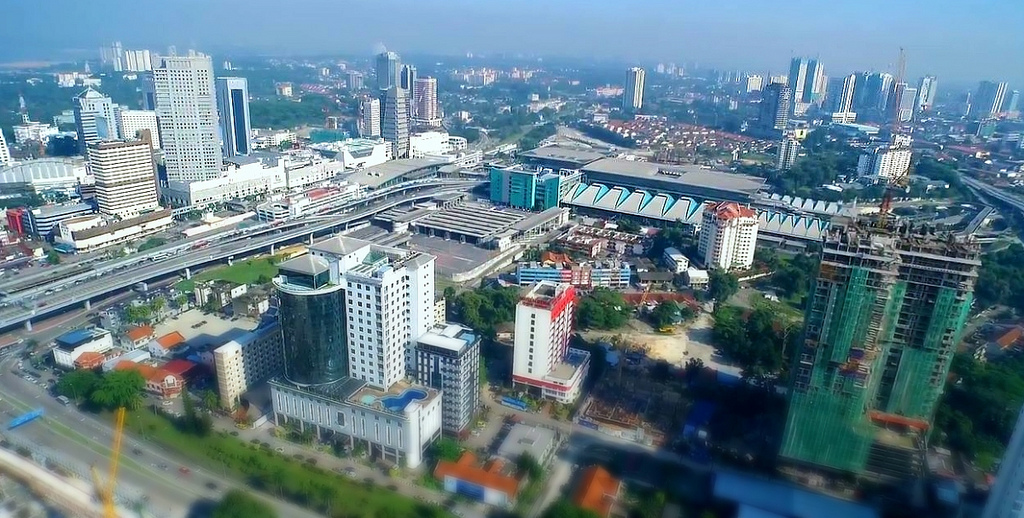
Johor Bahru sits directly across the strait from Singapore, and its modern identity is shaped almost entirely by that proximity - it's become a budget shopping and entertainment overflow valley for Singaporeans, who cross over for cheaper food, groceries, and retail at malls like Johor Bahru City Square and the newer developments near the border. That dynamic gives JB a slightly transactional feel compared to Malaysia's other major cities, more about value shopping and day-trip convenience than heritage tourism. That said, JB isn't without its own attractions: the Sultan Abu Bakar State Mosque is a genuinely striking colonial-Victorian-Moorish hybrid overlooking the strait, and Legoland Malaysia (with an attached water park) is a legitimate family destination that draws visitors independent of the Singapore connection. Most travelers use JB either as a low-cost gateway into or out of Singapore, or as a one or two-day family trip centered on Legoland, rather than a deep dive into the city itself.
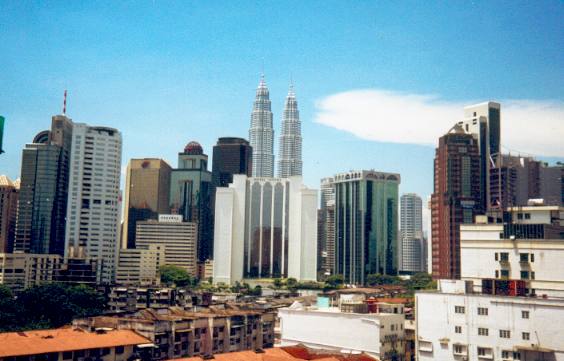
Kuala Lumpur is a genuinely multicultural capital where Malay, Chinese, Indian, and indigenous influences sit side by side rather than blended into something homogeneous - you can walk from the colonial-era Merdeka Square and the Masjid Jamek mosque into Chinatown's Petaling Street, then into Little India's Brickfields, all within a few kilometers of the glass-and-steel Petronas Towers. That juxtaposition, old shophouses under the shadow of one of the world's tallest twin towers, is the city's defining visual. The food is arguably KL's strongest card: hawker centers and mamak stalls (24-hour Indian-Muslim eateries) serve some of the best and cheapest food in Southeast Asia, and it's worth structuring at least one day purely around eating - nasi lemak, banana leaf rice, char kway teow, and late-night roti canai are all genuinely excellent here rather than tourist-adjacent versions of themselves. The Petronas Towers and KLCC Park are the postcard image, but the Batu Caves just outside the city (a Hindu shrine built into limestone caverns, reached by a steep flight of rainbow-painted stairs guarded by macaques) is arguably more memorable and shouldn't be skipped as a half-day trip. KL can feel disjointed to first-time visitors because it lacks a single compact 'old town' the way Malacca or Penang do - the city grew as a tin-mining boomtown and later a modern capital, so its history is scattered across neighborhoods rather than concentrated in one walkable core. Bukit Bintang is the modern retail and nightlife hub, Chinatown and Merdeka Square hold the colonial and early-20th-century history, and KLCC is the 21st-century financial and shopping district; treat KL as three or four distinct areas connected by rail rather than one city center you can cover on foot. Traffic and heat are the two things that will shape your days here more than anything else - the tropical humidity makes outdoor walking between sights tiring by midday, and KL's roads were built for cars, not pedestrians, with highways and flyovers cutting through areas that look close together on a map but are awkward to cross. Plan around the rail lines, do outdoor sightseeing (Batu Caves, KLCC Park) in the morning, and save the malls and hawker centers for the heat of the afternoon and the cool of the evening.
Malacca (Melaka) is Malaysia's most historically layered city, having passed through Malay sultanate rule, then Portuguese conquest (1511), then Dutch takeover (1641), then British control, each leaving physical traces still standing within a few hundred meters of each other. The Portuguese A Famosa fort ruins, the salmon-pink Dutch Stadthuys and Christ Church, and British-era shophouses all sit within the UNESCO-listed core, making it one of the few places in Southeast Asia where three successive colonial powers' architecture survives in close proximity. Jonker Street is the heart of the old town and the center of Malacca's Baba Nyonya (Peranakan) culture - descendants of early Chinese immigrants who intermarried with local Malays and developed a distinct cuisine, architecture, and dress. The Baba Nyonya Heritage Museum, set in an actual restored Peranakan townhouse, is a better introduction to this culture than any plaque or placard, and Nyonya food (a Chinese-Malay fusion cuisine - think laksa, chicken pongteh, and cendol) is reason enough on its own to linger over meals here. Malacca has become one of Malaysia's most touristed towns, and it shows in the density of souvenir shops and the crowds that descend on weekends, particularly during the Jonker Street night market. That said, the historical density is real and not manufactured - this genuinely was the most important trading port in Southeast Asia for a couple of centuries, and the layered colonial architecture, working Chinese clan temples, and Peranakan heritage give it a depth that a lot of prettified old towns lack once you look past the souvenir stalls.
Putrajaya is Malaysia's purpose-built federal administrative capital, constructed from the 1990s onward on former plantation land to relieve congestion in Kuala Lumpur and house the country's government ministries and the Prime Minister's office. The result is a city of grand, almost surreal scale: wide boulevards, an artificial lake, and monumental architecture blending Islamic, Malay, and modernist styles, most notably the pink-domed Putra Mosque and the striking black 'Iron Mosque' (Masjid Tuanku Mizan) that appears to float on the water. It's an odd place to visit precisely because it's a government city rather than an organic one - there's little street life, few old buildings, and no messy commercial districts, which makes it feel closer to a very ambitious architectural showcase than a place people actually wander. Most visitors treat it as a half-day or one-day trip from KL (it's about 25km south, near the airport), focused on photographing the mosques and the Seri Wawasan and Seri Gemilang bridges, rather than a multi-day stay.
Sabah, in Malaysian Borneo, is built almost entirely around nature and wildlife, and it delivers on a scale that's rare even by Borneo's standards. Mount Kinabalu, Southeast Asia's highest peak outside the Himalayas-adjacent ranges, is a genuine (if strenuous) two-day climbing trip requiring advance permits, drawing trekkers specifically for the summit sunrise. The Kinabatangan River is one of the best places in Borneo to see wild orangutans, proboscis monkeys, pygmy elephants, and hornbills from a boat, with dawn and dusk river cruises the standard way to experience it. Sepilok's orangutan and sun bear rehabilitation centers offer a more guaranteed (if less wild) sighting for travelers with less time. Off the coast, Sipadan is internationally rated as one of the world's best dive sites, with a strict daily permit system limiting numbers to protect the reef — booking well ahead is essential for divers set on visiting. Sabah generally sees fewer visitors than Peninsular Malaysia despite comparable or superior natural attractions, largely due to the extra time and cost of reaching Borneo. Dry season (roughly March-October) offers the most reliable conditions for both trekking and diving.
Sarawak, Malaysia's largest state and the other half of Malaysian Borneo alongside Sabah, centers its appeal on rainforest, caves, and indigenous longhouse culture rather than Sabah's mountain-and-marine-park focus. Gunung Mulu National Park, a UNESCO World Heritage Site, holds some of the largest cave systems in the world, including the Sarawak Chamber — the single largest known cave chamber on Earth by floor area — alongside the nightly "bat exodus" of millions of bats leaving Deer Cave at dusk, one of the more genuinely spectacular natural sights in Borneo. Kuching, the state capital, is a walkable riverside city with strong Chinese, Malay, and indigenous influences visible in its food and architecture, and serves as the practical base for arranging trips into the interior. Longhouse visits — staying with or touring traditional Iban or Bidayuh communal dwellings — offer a genuine, if increasingly tourism-adapted, look at Bornean indigenous life. Sarawak sees fewer visitors than Sabah despite comparable natural significance, in part because its highlights (caves, longhouses) require more guided logistics than a straightforward beach or dive trip. Dry season (roughly May-September) is generally more reliable, though Mulu's cave systems are accessible year-round.
Taman Negara is one of the world's oldest rainforests, and a visit here centers on activities based out of Kuala Tahan — the canopy walkway (one of the longest in the world), night jungle walks in search of nocturnal wildlife, river cruises, and multi-day treks into deeper, more remote parts of the park for those with more time. It's a genuinely large protected area, so most visitors only scratch the accessible fringe near Kuala Tahan unless committing to longer expeditions. The getting-there process — road to Jerantut, then boat up the river — is itself part of the experience for those who choose the riverboat route, offering a scenic approach through the forest before even reaching the park proper.
West Coast Islands: Malaysia's West Coast Islands — Penang and Langkawi chief among them — sit in the Malacca Strait and are considerably easier to reach than the East Coast Islands, with their own airports rather than requiring a boat transfer, which shapes their more developed, more visited character. Penang, and specifically its capital Georgetown, is as much a food and heritage destination as a beach one: a UNESCO World Heritage old town of colonial architecture and street art, layered over what's widely considered Malaysia's best street food scene, mixing Malay, Chinese, and Indian hawker traditions in a way unique to the island's multicultural history. Langkawi, further north near the Thai border, leans more into the classic tropical-island format — duty-free shopping, a scenic cable car up to Mat Cincang mountain, and calmer, more resort-oriented beaches than the Perhentians or Tioman on the east coast. Unlike the East Coast Islands, the west coast doesn't shut down for monsoon season, making it a workable year-round option, though the driest and most popular months are typically December-February.
Malaysia FAQs
Roughly comparable to Thailand and generally cheaper than Bali's more tourist-heavy areas, with Kuala Lumpur in particular offering strong value relative to Singapore just across the border.
About a week covers Kuala Lumpur and Penang comfortably; add 3-4 more days if including Borneo, which is worth treating as a separate leg given the distance.
Yes — its UNESCO-listed old town, street art, and widely-regarded-as-the-country's-best food scene make it a worthwhile standalone stop, not just a Kuala Lumpur day trip.
Very much so, particularly Borneo — orangutans in Sabah, some of the world's best diving at Sipadan, and Mount Kinabalu for trekkers.
Varies by coast — the west coast (Kuala Lumpur, Penang) is driest roughly December-February, while the east coast and Borneo have their own distinct dry seasons, so check the specific region.
Things to do in Malaysia




Reviews/Comments
No comments yet — be the first.