Java
Java is Indonesia's most populous island and its political and economic core, home to the capital Jakarta and to two of the country's most significant ancient monuments. Borobudur, the world's largest Buddhist temple, and Prambanan, a soaring Hindu temple complex, sit within a short drive of each other near Yogyakarta and are both UNESCO World Heritage Sites — genuinely essential stops for anyone interested in Southeast Asian history.
Yogyakarta itself functions as Java's cultural capital, with a still-functioning Sultan's palace, traditional batik and silversmithing workshops, and a lively student-city energy from its large university population. Jakarta, by contrast, is a sprawling, traffic-heavy modern metropolis — worth a day or two for its museums and food scene, but rarely the main reason to visit Java.
East Java holds some of the country's most dramatic volcanic scenery: Mount Bromo's otherworldly, moon-like caldera is one of Indonesia's most photographed sunrise viewpoints, and Ijen's blue sulfuric flames (visible only at night) are a genuinely unusual sight found in very few other places on Earth.
Java sees a fraction of Bali's tourist volume despite comparable or greater historical significance, which makes it a good add-on for travelers wanting more depth without the crowds. Dry season (April-October) is the more reliable window for volcano treks.
Bandung sits at around 700 meters elevation in the volcanic highlands of West Java, and that altitude is central to its identity — noticeably cooler than the sweltering lowlands, which made it a favored retreat for Dutch colonial residents and gave the city its nickname "Paris van Java" along with a legacy of striking Art Deco architecture, much of it still standing along Jalan Braga and around the city center. Today Bandung is Indonesia's third-largest city and a major domestic tourism destination in its own right, particularly for weekenders from Jakarta drawn by the cooler climate, factory outlet shopping, and a genuinely good food and café scene — the city has a strong culinary reputation within Indonesia, from traditional Sundanese food to a thriving independent coffee shop culture. It's also a university town (Institut Teknologi Bandung, one of Indonesia's top engineering schools, is here), which gives it a younger, more creative energy than many other Javanese cities. Outside the city proper, the surrounding highlands hold Bandung's most photographed attractions: Tangkuban Perahu, an accessible volcanic crater you can drive nearly to the rim of; the Ciwidey area with its tea plantations, hot springs, and Kawah Putih's pale turquoise crater lake; and Lembang's assorted family attractions and night markets. These day trips are what most visitors build a Bandung itinerary around, alongside the city's shopping and food. Bandung's downside is traffic, which can be severe, especially on weekends and during the toll road's frequent jams from Jakarta; travelers on a tight schedule should factor this in heavily, and the high-speed rail link has become the preferred way to avoid it entirely for a Jakarta-Bandung trip.
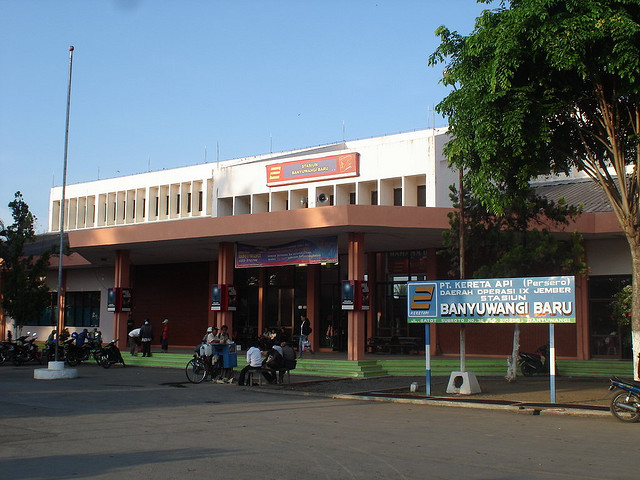
Banyuwangi sits at Java's easternmost tip and is best known as the gateway to Ijen, the volcanic crater famous for its electric-blue sulfuric flames, visible only in the pre-dawn darkness, and for the turquoise, highly acidic crater lake it also holds. Sulfur miners still carry loads of solid sulfur down the crater's steep paths by hand for a living, and passing them on the trail is one of the more sobering aspects of the otherwise spectacular hike. The town itself is a modest, unpretentious transit point rather than a destination, mainly used as a base for Ijen and as the ferry crossing to Bali. Beyond the volcano, the surrounding regency has some worthwhile if less-visited spots: Sukamade beach for sea turtle nesting within Meru Betiri National Park, and Plengkung (G-Land) beach, a renowned surf break reached mostly by 4WD or boat and popular with a dedicated surfing crowd.
Bogor sits in the hills south of Jakarta and is known first for its Botanical Gardens, a large, well-established 19th-century collection founded under Dutch rule that remains one of Indonesia's best and most pleasant green spaces, home to the presidential palace grounds (Istana Bogor) adjoining it, along with sprawling grounds of old rain trees and a notable orchid collection. The city is popularly nicknamed the "City of Rain" for its frequent afternoon showers, a product of its highland position that also gives it a cooler climate than Jakarta. Most visitors treat Bogor as an easy day trip from the capital via the direct commuter train, coming mainly for the gardens and a look at the palace exterior, rather than staying overnight, since Jakarta's amenities are close enough to return to.
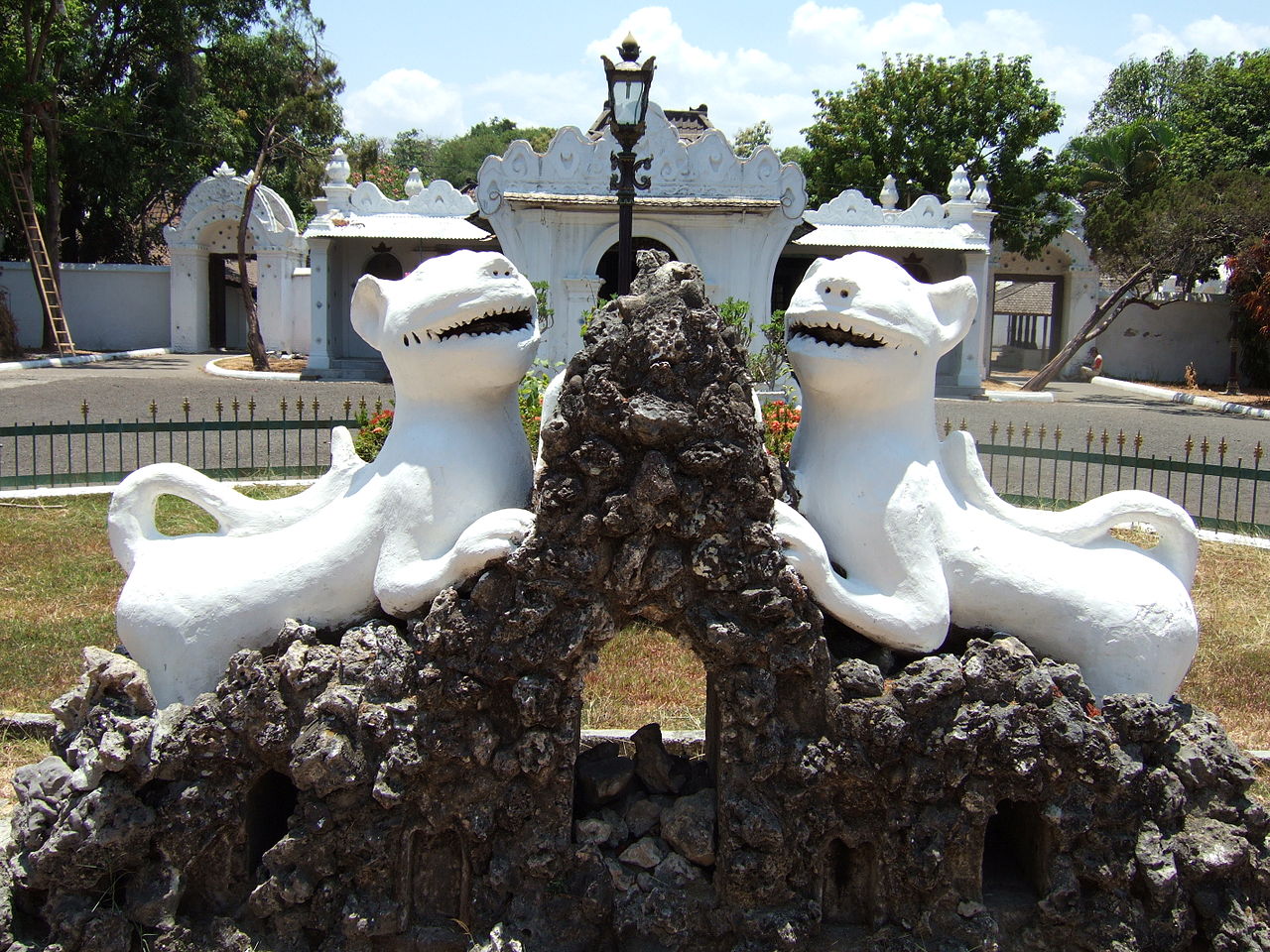
Cirebon sits on Java's north coast at the cultural border between Sundanese West Java and Javanese Central Java, and its history as an old trading port with strong Chinese, Arab, and Islamic influences gives it a distinct identity from either — visible in its cuisine, its batik traditions (Cirebon's mega mendung cloud-motif batik is famous in its own right), and its several keratons (palace complexes), Kasepuhan and Kanoman among them, still home to hereditary sultanate families with royal artifacts on display. The city is a common stop for travelers moving along Java's northern rail corridor rather than a dedicated destination, but it rewards a day or two with genuinely distinctive food (empal gentong, a rich coconut-based beef soup, is a local specialty) and a look at Java's less-visited royal and Islamic heritage sites, including the Sunan Gunung Jati tomb complex, an important pilgrimage site as the resting place of one of the nine Islamic saints credited with spreading Islam across Java.
Dieng Plateau: Dieng is a high volcanic plateau — over 2,000 meters up — scattered with small ancient Hindu temples (among the oldest in Java, predating Borobudur and Prambanan), active sulfur craters, and color-shifting lakes like Telaga Warna. The cold, misty mornings here are unusual for Indonesia and part of the draw, along with the chance to see the 'golden sunrise' from Bukit Sikunir at dawn. Because the plateau is essentially a cluster of separate small attractions rather than one site, most visitors budget a full day or overnight in Dieng village to cover the crater, temples, and lake without rushing, sometimes adding a pre-dawn hike up Sikunir hill for sunrise before heading back down.
Jakarta is Indonesia's capital and by far its largest city, a sprawling, humid, traffic-choked megacity of over 10 million people (more than 30 million across the wider metro area) that most travelers pass through rather than linger in, though it rewards those who do with a genuinely deep, if scattered, set of things to see. It's not a conventionally pretty city — decades of rapid, poorly planned growth have left it short on green space and long on traffic — but it's the political, economic, and cultural center of the country and unavoidable for most Indonesia itineraries. Kota Tua, the old town, holds the best concentration of Dutch colonial-era buildings, centered on a cobblestoned square (Fatahillah Square) with museums, cafés, and bike rental stalls; nearby Sunda Kelapa harbor still has traditional wooden pinisi schooners loading cargo much as they have for generations. The National Monument (Monas) and surrounding Merdeka Square anchor the city center, while the National Museum holds one of Southeast Asia's best archaeological and ethnographic collections, an underrated stop given how few visitors make time for it. Jakarta's other major draw for visitors is food and shopping — it has Indonesia's most diverse and ambitious restaurant scene, from unpretentious warungs to genuinely excellent fine dining, and a mall culture that functions as much as social infrastructure (with air conditioning) as retail. Neighborhoods like Menteng offer a quieter, tree-lined, more residential feel with some of the city's best colonial-era houses, many now embassies or private homes. Most travelers use Jakarta as an arrival/departure hub bookending trips elsewhere in Indonesia, giving it a day or two rather than a full trip; those who do stay longer are usually here for business, and the city's tourist infrastructure — while extensive in terms of hotels and restaurants — is not built primarily around leisure sightseeing the way Yogyakarta or Bali's is.
Malang sits in the cool highlands of East Java and, thanks to its elevation, has a noticeably more comfortable climate than the lowland cities nearby, which has made it both a long-standing colonial-era retreat and a modern hub for East Java's most popular natural attractions. The city itself has a pleasant, walkable old quarter with some good Dutch colonial architecture, along with a lively, youthful energy from its large student population. Malang is one of the two common bases (alongside Probolinggo) for visiting Mount Bromo, the smoking volcanic caldera whose sunrise views over a sea of clouds are among Java's most photographed sights; some routes from the Malang side offer a different, less crowded approach to the crater than the more heavily trafficked Probolinggo/Cemoro Lawang route. The neighboring town of Batu, just outside Malang, has become a major domestic tourism draw in its own right with theme parks, apple orchards, and night markets that pull large weekend crowds from across East Java. Beyond Bromo and Batu, the Malang area has several worthwhile waterfalls (Coban Rondo and Coban Pelangi among the better known) and is a reasonable base for exploring the wider highlands, making it a solid multi-day stop for travelers who want more than a quick volcano sunrise before moving on.
Probolinggo itself is an unremarkable transit town, but it's the standard gateway to Mount Bromo, one of Java's most iconic sights — an active volcanic caldera rising out of a stark, sand-covered plain, with a viewpoint (commonly Penanjakan or King Kong Hill) delivering sunrise views over the crater and its neighboring peaks that are among the most photographed in Indonesia. Nearly every visitor to Probolinggo is here for Bromo specifically, staying overnight in the crater-rim village of Cemoro Lawang before an early jeep convoy to the viewpoint. After sunrise, most itineraries continue to the Sea of Sand, a flat volcanic plain at Bromo's base, followed by a hike or horse ride up to the crater rim itself, where sulfurous smoke still drifts from the active vent. The whole visit is typically compressed into a single overnight stop between longer stretches of a Java itinerary, given Probolinggo's function as a pure access point.
Semarang is Central Java's main port city and, while less visited than Yogyakarta or Solo, has a genuinely worthwhile old town, Kota Lama, a compact district of restored Dutch colonial buildings now filled with cafés and small museums, centered on the striking Blenduk Church. The city's other notable landmark is Sam Poo Kong, a Chinese temple complex commemorating the visit of Admiral Zheng He, reflecting Semarang's long history as a center of Chinese-Indonesian (peranakan) culture and trade. Most travelers pass through Semarang either as a transit stop along Java's north coast or as an alternate gateway to Central Java's inland attractions, but the city rewards a day or two on its own merits — a good food scene reflecting its mixed Javanese, Chinese, and Arab influences (lumpia Semarang, a distinctive local spring roll, is the signature dish), and a walkable, photogenic old town that's seen real restoration investment in recent years.
Solo, formally Surakarta, is often described as Yogyakarta's quieter sibling — another seat of traditional Javanese royal culture, with its own sultanate palace (Kasunanan) and a second royal residence (Mangkunegaran), but with far fewer tourists and a slower, more workaday pace than its more famous neighbor an hour away. For travelers who found Yogyakarta's palace and heritage sites appealing but wanted them without the crowds, Solo delivers much the same royal Javanese atmosphere with noticeably less tourist infrastructure around it. The city is known for refined traditional arts — batik, gamelan music, and classical Javanese dance are all practiced here with a seriousness that rivals Yogyakarta's, and Solo's batik market (Pasar Klewer) is one of the largest and best in Java. It's also considered to have some of Central Java's best food, with dishes like nasi liwet and serabi (rice-flour pancakes) as local specialties worth seeking out. Most visitors combine Solo with Yogyakarta given the short train connection between them, treating it as a lower-key one or two-day add-on rather than a primary destination, but it rewards those who make the stop with a more authentic, less commercialized slice of Javanese court culture.
Surabaya is Indonesia's second-largest city and East Java's economic center, historically important as a major port and as the site of a pivotal 1945 battle against returning colonial forces that's commemorated across the city, including at the towering Heroes Monument (Tugu Pahlawan). It has a rougher-edged, more industrial character than Java's more tourist-oriented cities, and most travelers use it primarily as a transport hub for reaching Bromo, Malang, or onward flights, rather than a primary destination. That said, the city has real pockets of interest: the old port district around Kota Lama has fading but atmospheric Dutch colonial buildings, the Arab Quarter around Ampel Mosque is a dense, lively area of narrow lanes, textile shops, and food stalls reflecting Surabaya's historic Arab and Islamic trading community, and the House of Sampoerna offers an interesting look at kretek (clove cigarette) manufacturing in a well-preserved colonial building. Surabaya is also a reasonable base for a day trip to Madura Island via the Suramadu Bridge, known for its bull-racing tradition (kerapan sapi) and distinct culture. Surabaya's food scene is a genuine highlight, with rawon (a dark, tamarind-and-keluak beef soup) as a signature dish alongside a broader East Javanese culinary tradition that's less internationally known than Bali's or Yogyakarta's but well regarded within Indonesia.
Yogyakarta (often shortened to Jogja) is the cultural heart of Java and, for many travelers, the most rewarding stop in the country outside Bali — a city that has managed to stay a genuine seat of traditional Javanese royal culture, still ruled in a ceremonial capacity by a reigning Sultan whose palace, the Kraton, remains a working royal residence open in part to visitors, while also functioning as a major university town with a young, creative energy visible in its arts scene, street life, and nightlife. The city's single biggest draw is its proximity to two of the world's great religious monuments: Borobudur, the largest Buddhist temple on earth, an enormous 9th-century stepped pyramid covered in relief carvings depicting Buddhist teachings, and Prambanan, a soaring cluster of Hindu temples dedicated to Shiva, Vishnu, and Brahma, considered Indonesia's finest Hindu temple complex. Both are UNESCO World Heritage sites and typically visited as separate half-day trips, with Borobudur often done at sunrise for both the light and the relative quiet before tour buses arrive. Within the city itself, the Kraton palace complex, the nearby water castle (Taman Sari), and the lively pedestrian energy of Malioboro Street (best for shopping, street food, and people-watching, if increasingly touristy and crowded) anchor a few days of sightseeing on their own. Yogyakarta is also Indonesia's unofficial batik capital, with numerous workshops around the city offering demonstrations and classes, and it has a strong, distinct food identity, with gudeg — a sweet, jackfruit-based stew — as the signature dish found everywhere from street stalls to sit-down restaurants. Beyond temples and palace, the wider region offers volcanic hiking on Mount Merapi (one of Indonesia's most active volcanoes, looming over the city and periodically restricting access during eruptions), a beach coastline to the south with striking limestone cliffs and karst caves, and enough depth that a four or five-day stay rarely feels like too much, especially compared to cities that are exhausted in a day or two.
Java FAQs
Yes, both are near Yogyakarta and commonly visited on the same day or on consecutive mornings, especially if doing Borobudur's popular sunrise tour first.
A day or two is enough for most visitors — it's Java's economic hub rather than its main tourist draw, which lies more in Yogyakarta and the volcanic east.
Fly or take a train to Surabaya or Malang, then a car/jeep transfer to the Bromo area — most visitors join an organized sunrise viewpoint tour given the pre-dawn timing.
Yes, significantly, despite comparable or greater historical significance — a good option for travelers wanting depth without Bali's crowds.
April-October (dry season) for the most reliable conditions, especially for the Bromo and Ijen volcano treks.
Things to do in Java







Reviews/Comments
No comments yet — be the first.