Lombok
Lombok sits just east of Bali across a narrow strait, and is often pitched as "Bali before Bali got crowded" — similar volcanic and beach scenery with noticeably less development and far fewer visitors, though that gap has been narrowing as Lombok's own tourism infrastructure grows.
Mount Rinjani, Indonesia's second-highest volcano, is the island's signature trek — a demanding multi-day climb to a crater lake and, for the fittest, the summit itself, popular with travelers looking for something more physically ambitious than Bali's usual itinerary. Kuta Lombok, on the south coast, has become the island's main surf and beach hub, with a much lower-key vibe than Bali's Kuta despite the shared name.
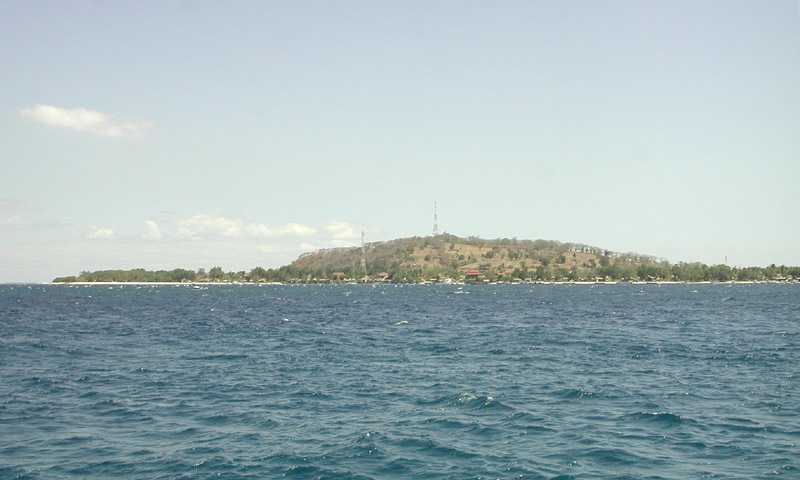
The Gili Islands — Gili Trawangan, Gili Meno, and Gili Air — sit just off Lombok's northwest coast and are car-free, motorbike-free islands reachable only by boat, each with a different personality: Trawangan for nightlife, Meno for quiet seclusion, and Air as a middle ground. All three offer strong snorkeling and diving right off the beach.
Lombok is Muslim-majority, unlike Hindu-majority Bali next door, which shows up in local dress norms and the call to prayer rather than temple ceremonies. Dry season (May-September) is the most reliable window for both beach time and the Rinjani trek.
Gili Air: Of the three Gili islands, Air is the quietest middle ground between Trawangan's nightlife and Meno's near-total stillness — a small, walkable island with a mellow local vibe, decent snorkeling and diving right off the beach, and no motorized traffic at all. It takes under two hours to walk the entire island's perimeter.
Gili Meno is the smallest and quietest of the three Gili islands, with a fraction of the guesthouses and restaurants found on Trawangan or even Air, making it the choice for travelers who want beach and not much else. It has an underwater sculpture park just offshore and a small salt lake in the island's interior, along with a turtle sanctuary that's a low-key rather than major attraction.
Gili Trawangan: Trawangan is the largest and liveliest of the Gili islands, known for a beach party and bar scene that's louder than anything else in the trio, alongside genuinely good diving and snorkeling and a walkable perimeter road with a viewpoint hill on the island's south side. It draws a younger, more social crowd than Air or Meno. Beyond the nightlife, the island has solid dive infrastructure with numerous PADI centers and easy access to reef sites and the chance to see sea turtles while snorkeling just off the beach — it's not purely a party destination even though that's its reputation.
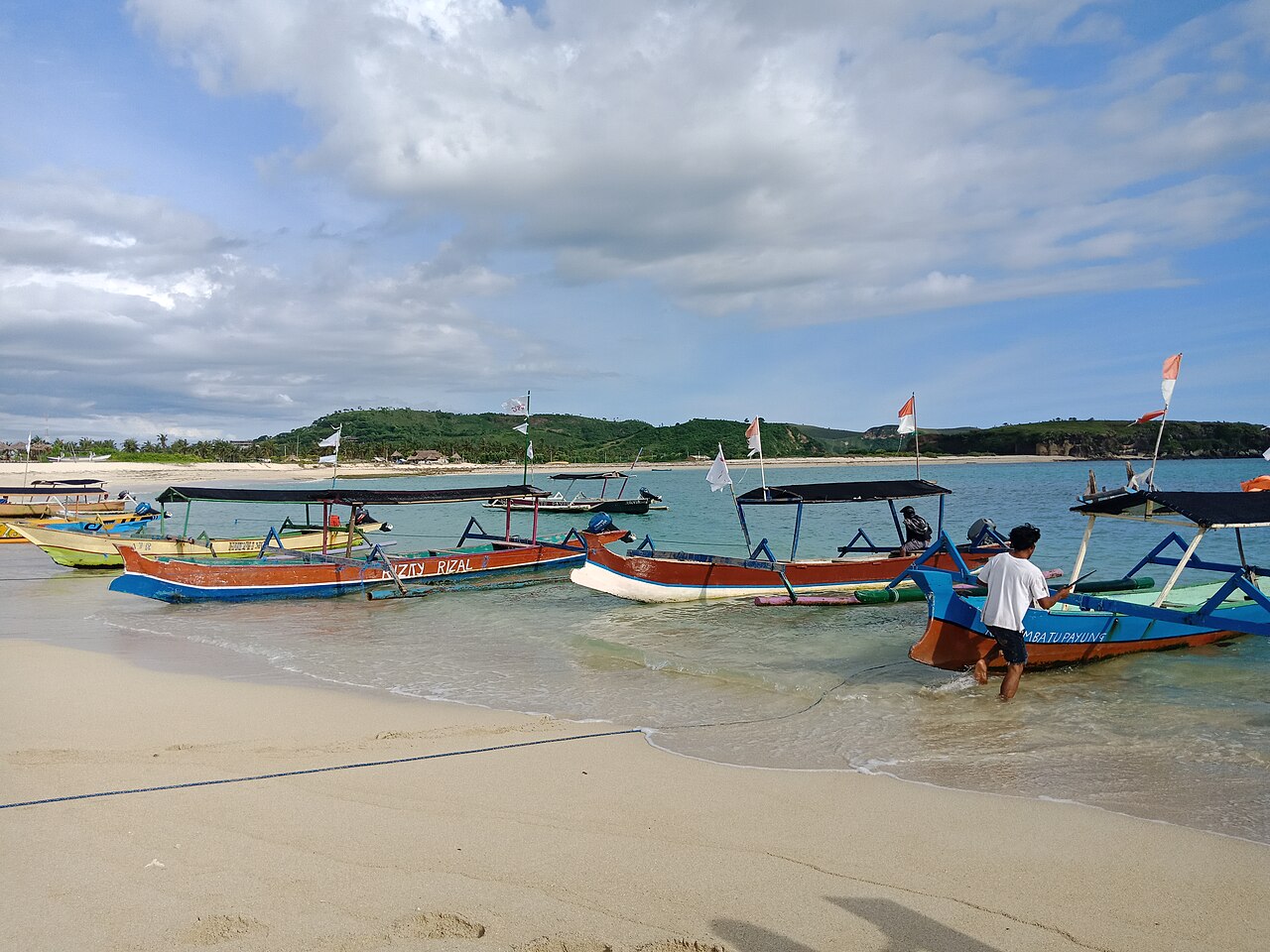
Kuta Lombok (not to be confused with Bali's Kuta) has grown from a quiet fishing village into Lombok's main surf and beach town, built around a series of striking bays along the island's south coast with turquoise water, dramatic hills, and a mix of sandy and reef breaks that draw surfers of varying levels. Selong Belanak and Mawun, a short drive from the main town, are among the most photogenic beaches, with gentler swimming conditions than the more exposed breaks directly at Kuta itself. The town has developed steadily but remains noticeably less built-up and less crowded than Bali's Kuta, with a growing but still low-key mix of surf camps, beach clubs, and guesthouses. It's also the site of the annual Bau Nyale festival, a traditional Sasak ceremony tied to a local legend and the harvesting of sea worms believed to bring good fortune, drawing large crowds from across the island on its date each year. Kuta Lombok works well both as a surf-focused base and as a more relaxed beach alternative to Bali, with day trips possible to the Pink Beach further east and other south-coast bays, though development has accelerated in recent years and some areas near the main strip now feel considerably busier than they did even five years ago.
Mount Rinjani: Rinjani is Indonesia's second-highest volcano and one of the country's classic multi-day treks, climbing to the crater rim overlooking a turquoise crater lake (Segara Anak) with an active new cone still smoking inside it, before continuing to the true summit for sunrise. It's a demanding trek — most itineraries run 2-4 days with steep scrambling sections, cold high-altitude camping, and a genuinely tough push to the 3,726m summit starting around midnight. The trek requires a registered guide and porters by regulation, and route options vary from a shorter rim-and-crater-lake trip to the full summit push, which is significantly harder and not guaranteed to be doable depending on weather and fitness. Hot springs near the crater lake are a common reward stop for those doing the multi-day route.
Senggigi was Lombok's original tourist beach town, developed a couple of decades before Kuta Lombok or the Gilis took over as the island's main draws, and it retains an older, somewhat faded resort-town character as a result — a string of hotels and restaurants along a curving bay, popular for sunset views back toward Bali's Mount Agung across the strait on clear days. Today Senggigi functions more as a convenient, quieter base than a headline destination, often used by travelers as a stopover en route to or from the Gili Islands (whose boats depart from ports nearby) or as a calmer alternative to the busier scenes at Kuta Lombok and the Gilis themselves. It's a reasonable choice for those wanting beach access without the party atmosphere of Gili Trawangan or the surf crowd of Kuta, though its own beaches and infrastructure are generally considered less impressive than either.
Lombok FAQs
Less so, which is part of its appeal — it has fewer crowds and a slower pace, though tourism infrastructure has been growing steadily.
A short boat ride from Lombok's northwest coast (Bangsal harbor is the main departure point); the islands themselves are car-free and best explored on foot or by bicycle.
Yes, genuinely demanding — it's a multi-day trek requiring a good fitness level and a licensed guide, not a casual day hike.
About 5 days covers the main coast and a Gili Islands add-on; include more time if attempting the Rinjani trek.
Majority Muslim, unlike neighboring Bali, which is majority Hindu — this shows up in local dress norms and daily rhythms.
Things to do in Lombok




Reviews/Comments
No comments yet — be the first.