
Sumatra
Sumatra is Indonesia's largest island west of Java and one of its least touristed relative to its scenery — dense rainforest, active volcanoes, and some of the last wild orangutan habitat left on Earth, all seeing a fraction of Bali's visitor numbers.
Bukit Lawang and the surrounding Gunung Leuser National Park are the island's best-known wildlife draw, offering multi-day jungle treks with genuine odds of spotting wild orangutans, alongside gibbons and (for the very fortunate) Sumatran tigers, though sightings of the latter are rare. This is one of only two places in the world with wild orangutans, the other being Borneo.
Lake Toba, a vast volcanic caldera lake with its own island (Samosir) in the middle, is treated as its own major destination in its own right (see its dedicated page) rather than a simple stop on a Sumatra itinerary.
Sumatra requires more logistics planning than Bali or Java — flights and road travel between regions take real time, and infrastructure is less developed — but rewards travelers specifically drawn to rainforest and wildlife over beaches and temples. Dry season (roughly May-September) is generally the more reliable window for trekking.
Banda Aceh was near the epicenter of the 2004 Indian Ocean earthquake and tsunami, which killed well over 150,000 people in Aceh province alone and remains the defining event in the city's modern history — visible everywhere from the PLTD Apung, a massive ship swept over a kilometer inland and left where it landed as a memorial, to mass graves, to the powerful Tsunami Museum designed by Indonesian architect Ridwan Kamil, which walks visitors through a dark entry tunnel evoking the wave before opening into exhibits on the disaster and recovery. Aceh is also distinct within Indonesia as the only province governed under a special autonomy that includes the implementation of Sharia law, a legacy of the region's long history as an independent, devoutly Islamic sultanate and its decades-long separatist conflict (GAM) that was ultimately resolved via a 2005 peace agreement partly catalyzed by the shared trauma of the tsunami. Visitors should dress modestly, particularly women, and be aware that alcohol is not sold and public behavior norms are more conservative than most of Indonesia. The Baiturrahman Grand Mosque, an Aceh Sultanate-era structure rebuilt and expanded under Dutch colonial rule, survived the tsunami largely intact even as the surrounding neighborhood was flattened, and stands today as both the city's architectural centerpiece and a symbol frequently invoked in tsunami-recovery narratives. Banda Aceh also functions as the main gateway to Weh Island (Pulau Weh), a short ferry ride away and known for some of Sumatra's best diving and snorkeling around Iboih and Gapang, making the city a practical one-to-two-night stop for tsunami history before continuing on to the island.
Bandar Lampung is southern Sumatra's main city and gateway, most notable to travelers as the departure point for boat trips to Anak Krakatau, the volcanic island that emerged from the caldera left by Krakatoa's catastrophic 1883 eruption — one of the most destructive volcanic events in recorded history, killing over 36,000 people mostly via tsunami. Anak Krakatau itself remains active and periodically erupts (including a major 2018 eruption and collapse that triggered another deadly tsunami), so trips there are genuinely weather- and activity-dependent rather than a routine excursion. The city itself is a workaday transport and commercial hub with limited standalone sightseeing, functioning as a stopover for the Krakatau boat trips and as the mainland gateway for ferries to and from Java via the Bakauheni-Merak crossing further south. Way Kambas National Park, a few hours away, is a notable draw for those with more time, known for its Sumatran elephant conservation program and one of the last strongholds of the critically endangered Sumatran rhino.
Batam functions primarily as a free-trade and industrial zone just a short ferry ride from Singapore, and much of its visitor traffic historically has been day-trippers and weekenders from Singapore and Malaysia coming for cheaper shopping, golf, spas, and seafood rather than for any distinctly Indonesian cultural experience. The island has a large manufacturing and electronics industry alongside its tourism side, giving it a more transactional, developed feel than most of Sumatra. For travelers using Batam as an entry or exit point to or from Singapore, it's a practical and cheap alternative to flying, and the island has decent resorts and beaches on its outer edges away from the industrial core, though nothing that competes with Sumatra's more scenic destinations further inland or south.
Belitung is known for a distinctive coastline of huge, smooth granite boulders scattered across white-sand beaches and shallow turquoise water, a geology unlike most of Indonesia's volcanic islands, concentrated around Tanjung Kelayang and the cluster of small islands just offshore. Boat-hopping day trips visiting several islands — Lengkuas with its 19th-century Dutch lighthouse, Kepayang, Batu Berlayar — are the standard way to see the area, with snorkeling over shallow, boulder-strewn reefs between stops. The island gained a surge of domestic tourist attention after Laskar Pelangi (The Rainbow Troops), a bestselling novel and hit film shot on Belitung, brought its landscapes and a formerly obscure tin-mining town into the national spotlight; some filming locations remain minor pilgrimage sites for domestic visitors. Tin mining is in fact Belitung's older economic backbone, and remnants of that industry — including tin-mining lakes with unusually vivid blue water from mineral runoff — are visible around the island alongside the tourism-focused coast. Belitung is easy to reach by direct flight from Jakarta, and three days is a comfortable amount of time to cover the main island-hopping circuit, explore Tanjung Pandan's town and a Chinese-Indonesian heritage quarter reflecting the island's historical mining-era immigration, and relax on the beaches without rushing.
Bengkulu's most distinctive historical claim is that it was a British colonial outpost, not Dutch, for close to 140 years, centered on Fort Marlborough, an 18th-century British East India Company fort still standing in reasonably good condition and open to visitors — an unusual footnote in a country otherwise defined by Dutch colonial history. Bengkulu was later exchanged with the Dutch for Malacca under an 1824 treaty, ending the British presence. The city and surrounding hills are also one of the best places in the world to see Rafflesia arnoldii, the enormous parasitic flower famous for its size and its notoriously foul smell, though sightings depend entirely on unpredictable, short-lived blooming events that require some luck or advance coordination with local trackers to catch. Bengkulu was also where Indonesia's founding president, Sukarno, spent several years in Dutch-imposed exile before independence, and his former residence here is preserved and open to visitors.
Berastagi is a cool-climate highland town in the Karo district of North Sumatra, popular with Medan residents as a weekend escape from the lowland heat, known for its fruit and vegetable market (a genuine working market rather than a tourist setup, selling produce grown in the surrounding volcanic-soil farmland) and its two flanking volcanoes, Sibayak and Sinabung. Sibayak is a relatively accessible, non-currently-hazardous climb with hot springs at its base for a post-hike soak, while Sinabung has been intermittently and sometimes violently active for over a decade, forcing periodic evacuations of nearby villages — a stark reminder that this is genuinely active volcanic terrain, not a scenic backdrop. The surrounding Karo Batak villages have their own distinct traditional architecture and customs, separate from the more commonly visited Toba Batak culture around Lake Toba, and a few traditional houses survive as living examples rather than museum reconstructions. Berastagi makes a sensible cooler-climate stop either on the way to or from Lake Toba, rather than a standalone multi-day destination.
Bukit Lawang is the main gateway for trekking in Gunung Leuser National Park to see semi-wild Sumatran orangutans, some descended from animals rehabilitated at a former rehabilitation center here (closed to feeding visitors since the early 2000s to reduce human dependency, though sightings along established trekking routes remain very likely). Treks range from half-day walks to multi-day jungle expeditions with camping, and guides are mandatory and licensed, both for safety in genuinely wild terrain and to protect the park's ecosystem. Beyond orangutans, the park and surrounding trails offer chances to see gibbons, Thomas leaf monkeys (endemic to this part of Sumatra, easily recognized by their distinctive mohawk-like crest), and a wide range of birdlife, though sightings of rarer species like tigers or rhinos are essentially theoretical for a standard visitor. The village itself was devastated by a flash flood in 2003 that killed over 200 people, linked partly to upstream deforestation, and has since rebuilt around its guesthouse and trekking economy along the Bohorok River. Two days is enough for a solid day-trek and a night in the village, though committed wildlife-watchers often extend to a two- or three-day jungle trek with camping for a better chance at extended sightings and a deeper stretch of the park.
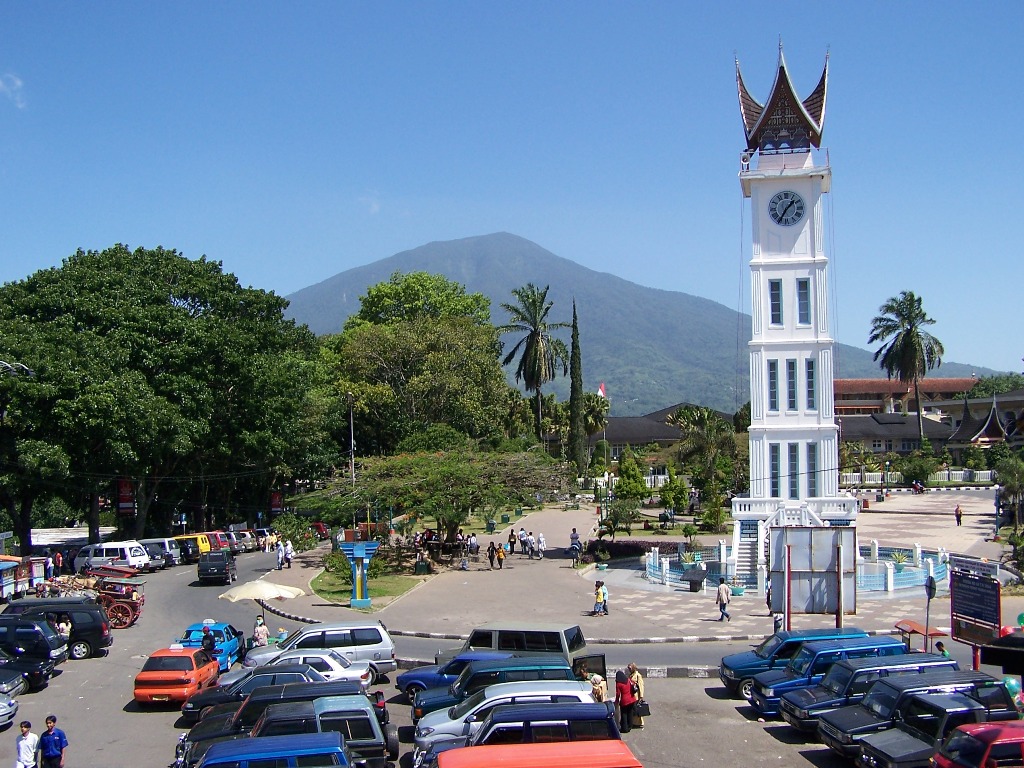
Bukittinggi is the cultural heart of the Minangkabau people, the world's largest matrilineal society, in which property and family lineage pass through the female line even as public and religious life remains led by men — a structure locals will explain readily and that shapes noticeably different gender dynamics from most of Indonesia. The town's Jam Gadang clock tower, a Dutch colonial-era landmark with a distinctive Minangkabau-style roof added later, anchors a lively central market area selling regional textiles, food, and crafts. Minangkabau architecture is instantly recognizable for its dramatic curved, upward-sweeping roof gables (gonjong), said to evoke buffalo horns, best seen in traditional rumah gadang longhouses in surrounding villages and reconstructed at the Pagaruyung Palace replica near Batusangkar, a short drive away. The Ngarai Sianok canyon, a steep, jungle-filled gorge right on the edge of town, and nearby Japanese-built WWII tunnels (Lubang Jepang, dug using forced Indonesian labor) add both scenic and difficult-history dimensions within easy walking distance of the center. Bukittinggi is also a launching point for the Harau Valley, a striking canyon of sheer cliffs and rice paddies, and Lake Maninjau, a large volcanic caldera lake with a dramatic switchback road descent, both reasonable day trips. Minangkabau cuisine, most famously rendang, originates from this region, and Bukittinggi's restaurants are a legitimate, arguably better, place to eat it than the diaspora Padang restaurants found across Indonesia and the world that take their name from the neighboring city. Three days allows for the town itself, a day trip to either Harau Valley or Lake Maninjau, and time to explore the matrilineal culture and cuisine that make this region distinct within Sumatra.
Dumai is an industrial port city on Sumatra's east coast, built around palm oil processing and petroleum refining, and its main relevance to travelers is as a ferry gateway between Sumatra and Malaysia (Malacca and Port Dickson), rather than as a place with sights of its own. Most visitors pass through only long enough to clear immigration and continue on toward Pekanbaru or elsewhere in Riau province.
Gunung Sitoli is the main town on Nias, an island off Sumatra's west coast known internationally among surfers for the world-class right-hand break at Lagundri Bay near Sorake, one of Indonesia's classic surf destinations since the 1970s. The town itself is a functional entry point rather than a destination, and most travelers move quickly through to the surf camps further south or to the island's distinctive traditional villages. Nias's inland and southern villages preserve a striking megalithic culture unrelated to the mainstream Batak or Minangkabau traditions of Sumatra, including massive stone monuments and the famous fahombo stone-jumping ritual, historically a rite of passage for young men leaping over stone structures roughly two meters high, still performed today largely for cultural preservation and visiting groups. Traditional Nias houses, built on angled wooden piles as an earthquake-resistant design, are another distinctive architectural feature surviving in villages like Bawomataluo. The island sits in a seismically active zone and was hit hard by both the 2004 tsunami and a major 2005 earthquake, and infrastructure recovery has been slow and uneven in parts, meaning road conditions and general amenities can be rougher than elsewhere in Sumatra — worth factoring into how much time you budget for getting around.
Jambi's standout attraction is Muaro Jambi, a sprawling 7th-to-13th-century Buddhist temple complex believed by many historians to have been a major center of the Srivijaya empire, one of Southeast Asia's most significant historical states, and possibly a site of Buddhist learning on the scale associated with Nalanda in India, though its full scholarly significance is still being uncovered as excavation continues. The site is far larger in area than more famous temple complexes elsewhere in Southeast Asia, but much of it remains unexcavated or lightly restored, giving it a quieter, more archaeological feel than a polished tourist attraction. Jambi city itself is a modest provincial capital without extensive standalone attractions beyond river life along the Batanghari River, Sumatra's longest, which was central to the region's historical trade routes. Most visitors treat Jambi as a short, temple-focused stop rather than an extended stay.
Lake Toba is the largest volcanic lake in the world, formed by a supervolcano eruption roughly 74,000 years ago so large it's linked by some researchers to a global volcanic winter — the scale is genuinely hard to grasp in person, with the lake itself over 100km long and containing its own substantial island, Samosir, in the middle. Samosir Island is where most visitors actually base themselves, and it holds the heart of Batak culture — an indigenous ethnic group with distinctive traditional houses (bolon), ceremonies, and a history that includes practices Western missionaries once found alarming enough to write extensively about, adding a layer of dark historical curiosity to the cultural visits available today. The lake's cool highland climate (a genuine relief from Sumatra's lowland heat and humidity) and calm water make it a popular spot for swimming and simply slowing down after the more demanding jungle-trekking legs of a Sumatra itinerary. Lake Toba sees relatively few international visitors compared to its scale and significance, making it a quiet, uncrowded stop even in Indonesia's high season. Dry season (roughly May-September) offers the most reliable weather for lake activities.
Lhokseumawe is an industrial city in Aceh built around natural gas processing, and its main historical relevance is proximity to the site of Samudera Pasai, one of the earliest Islamic sultanates in Southeast Asia, dating to the late 13th century and considered a foundational point for Islam's spread through the archipelago; some royal tombs from this era survive nearby. The city itself has limited tourist infrastructure and functions mainly as an industrial and administrative center rather than a destination. Most travelers passing through are doing so for business tied to the gas industry or as a stop along the Aceh coastal route rather than for dedicated sightseeing.
Medan is Sumatra's largest city and its main air gateway, a sprawling, traffic-heavy commercial hub that most travelers pass through rather than linger in, though it has genuine historical layers worth a day if time allows. The Sultanate of Deli's legacy is visible in the Maimun Palace, a late-19th-century structure blending Malay, Islamic, Indian, and European architectural influences, and the adjacent Grand Mosque, both reflecting the wealth Deli accumulated from the colonial-era tobacco boom that built much of the city's early economy. Medan's population is unusually diverse for an Indonesian city, with substantial Chinese-Indonesian, Indian-Tamil, and Batak communities alongside Malay residents, a mix reflected in its food scene — Medan is often cited as having some of Indonesia's best and most varied street food, spanning Chinese-Indonesian dishes, Indian curries in the Kampung Madras district, and Batak specialties like saksang (a pork dish, notable in a majority-Muslim country) that reflect the Christian Batak population's presence in the city. Medan's real function for most itineraries is as the logistics hub for reaching North Sumatra's more compelling destinations — Lake Toba (Southeast Asia's largest volcanic lake, with the Batak cultural island of Samosir at its center), Bukit Lawang for orangutan trekking, and Berastagi's highland volcanoes — all a multi-hour drive away and typically arranged as onward trips from a night or two in the city. Given the traffic and general lack of must-see sights relative to its size, most travelers budget one to two nights in Medan primarily to eat well and organize transport, rather than as an extended standalone stop.
Meulaboh was one of the towns hit hardest by the 2004 Indian Ocean tsunami, sitting directly on Aceh's exposed west coast, and much of the town was destroyed and has since been rebuilt with tsunami-resistant infrastructure and evacuation planning informed directly by that experience. It's also historically notable as the birthplace of Cut Nyak Dhien, a celebrated Acehnese resistance leader against Dutch colonial rule, commemorated in the town's airport name and local memory. Beyond its history, Meulaboh functions mainly as a coastal waypoint along Aceh's west coast route, with limited dedicated tourist infrastructure and few visitors passing through for reasons other than the tsunami history or onward travel.
Padang is West Sumatra's capital and the namesake of Padang cuisine — the sprawling, globally exported style of Minangkabau restaurant serving numerous small dishes displayed in the window and charged based on what you actually eat, found from Jakarta to Amsterdam. Eating it here, close to its origin, is one of the city's main appeals, alongside a well-preserved old town of Chinese shophouses and Dutch colonial warehouses along the Batang Arau river, a legacy of the city's history as a major pepper and spice trading port. Padang sits directly on a major fault line and was devastated by a serious earthquake in 2009 that killed over a thousand people; the city has since invested heavily in tsunami evacuation infrastructure, including clearly marked evacuation routes and towers, given its exposure to the same subduction zone that produced the 2004 Indian Ocean tsunami. This isn't background trivia — locals take earthquake and tsunami preparedness seriously, and visitors should familiarize themselves with evacuation signage as a matter of course. The city is also the main gateway to the Mentawai Islands, a remote archipelago off Sumatra's west coast famous globally among surfers for consistent, powerful reef breaks, and less commonly known for the Mentawai people's distinct animist culture and traditional tattooing traditions, though visiting requires a separate multi-hour boat crossing or charter flight and is typically arranged as an extension trip rather than a Padang day trip. Padang works well as a three-day base: exploring the old town and eating well, a day trip to nearby islands or the scenic coastal road toward Painan, and using the city as a jumping-off point either toward Bukittinggi and the Minangkabau highlands inland, or toward the Mentawai Islands offshore for those with more time and a taste for serious surf.
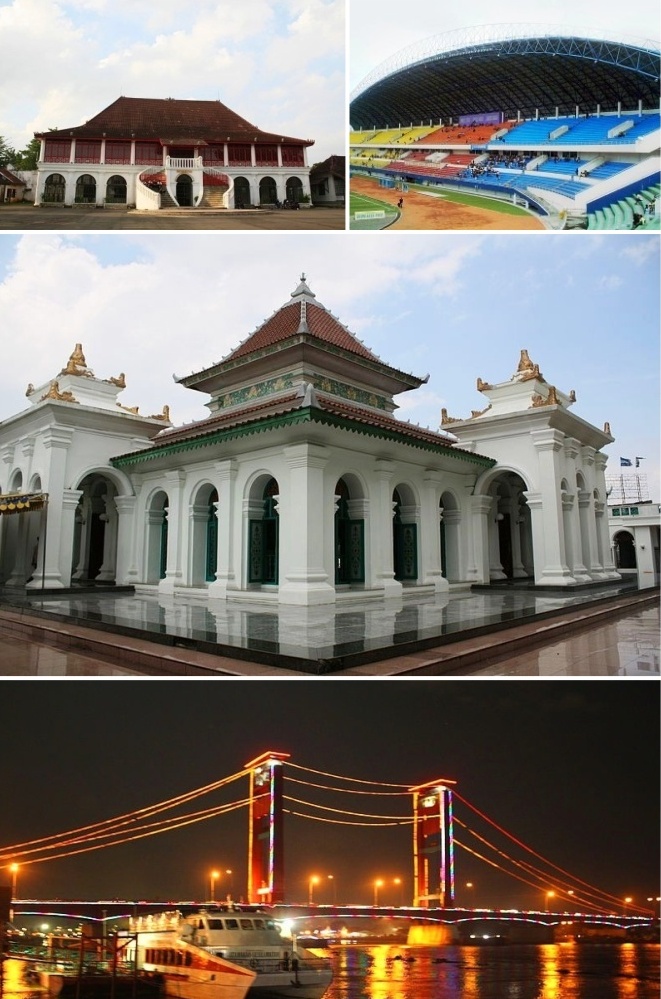
Palembang claims to be the historical seat of Srivijaya, the powerful maritime trading empire that dominated the Malacca Strait and much of maritime Southeast Asia from roughly the 7th to 13th centuries — a claim supported by archaeological finds along the Musi River, though the exact location of Srivijaya's capital remains debated among historians, with Muaro Jambi in neighboring Jambi province also a strong contender. Palembang leans into this legacy regardless, and the Musi River itself, spanned dramatically by the Ampera Bridge, remains the organizing feature of the city, much as it likely was in Srivijaya's era. Kemaro Island, a small island in the middle of the Musi River, holds a Buddhist-Chinese temple and pagoda tied to a well-known local legend of a Chinese prince and a local princess, and is a popular boat destination especially lively during Chinese New Year celebrations, reflecting Palembang's significant Chinese-Indonesian population and history as a trading port. The Great Mosque (Masjid Agung), built by the Palembang Sultanate in the 18th century, blends Javanese, Chinese, and European architectural elements in a way distinctive to the city's layered trading history. Palembang is also the origin of pempek, a fishcake dish served in vinegar-based sauce that's exported across Indonesia but best and most varied in its home city, along with other river-adjacent specialties reflecting the Musi's role as both trade route and food source. Two days is a reasonable amount of time to explore the riverfront, visit Kemaro Island by boat, see the Great Mosque, and eat through the city's pempek variations without needing to extend further.
Pangkal Pinang is the capital of Bangka Island, historically Indonesia's other major tin-producing region alongside Belitung, and the city itself functions mainly as an administrative and transit base for exploring the island's granite-boulder beaches (similar in character to Belitung's, though generally less developed for tourism) and old tin-mining sites, including striking mining lakes with vivid blue-tinted water from mineral runoff. The city has a notable Chinese-Indonesian population and Buddhist temple heritage tied to the historical tin-mining workforce, but overall Pangkal Pinang sees far fewer visitors than Belitung despite comparable coastal scenery, largely due to less developed tourism infrastructure and marketing.
Parapat is the main mainland gateway to Lake Toba, the enormous volcanic caldera lake formed by a supervolcanic eruption roughly 74,000 years ago — one of the largest volcanic events in Earth's history, significant enough that some researchers link it to a genetic bottleneck in early human populations. Samosir Island, sitting in the middle of the lake and reached by ferry from Parapat's harbor, is itself larger than Singapore and home to the Toba Batak people, whose traditional saddle-roofed houses, animist-influenced Christian traditions, and distinctive stone burial sites (including the elaborately carved sarcophagi of King Sidabutar in Tomok) are the main cultural draw of a Lake Toba visit. Parapat town itself is a fairly ordinary lakeside transit and market town, with most travelers spending only a night here before or after crossing to Samosir, where the more atmospheric guesthouses, traditional villages, and lake swimming are found. The scenery around the lake — cool highland air, terraced hillsides, and the sheer scale of the caldera — is the primary draw regardless of which side you base yourself on.
Pekanbaru is the capital of Riau province and functions primarily as an oil-and-palm-oil economic hub, with limited dedicated tourist attractions beyond the An-Nur Grand Mosque, a striking structure reflecting the historical Riau Sultanate's Malay-Islamic architectural style, and Siak Palace further afield, the former seat of the Siak Sultanate with well-preserved royal regalia and architecture. Most travelers treat Pekanbaru as a business or transit stop rather than a leisure destination, using it as a connection point for other parts of Riau province or as an entry point for those working in the region's resource industries.
Sibolga is a small coastal town on Sumatra's west coast, mainly relevant to travelers as a ferry departure point for Nias Island, an alternative to flying via Gunung Sitoli or Medan. The town itself has a modest fishing-port character with limited dedicated tourist attractions, and most visitors pass through only long enough to catch a ferry connection.
Tanjung Pinang is the capital of the Riau Islands province and holds real historical weight as a former center of the Johor-Riau Sultanate, a Malay maritime power whose legacy is best preserved on nearby Penyengat Island, a short boat ride from the Tanjung Pinang waterfront. Penyengat holds the striking yellow Sultan Riau Mosque, built partly using egg whites in its original mortar according to local tradition, along with royal tombs and palace ruins that make it one of the more significant Malay historical sites in the region. Tanjung Pinang itself is a modest port town with a mixed Malay and Chinese-Indonesian population and history as a trading hub, and functions well as a base for the short trip to Penyengat and as a quieter, less commercialized alternative to nearby Batam for those entering Indonesia from Singapore or Malaysia by ferry.
Sumatra FAQs
Bukit Lawang and the surrounding Gunung Leuser National Park, via multi-day guided jungle treks — one of only two places on Earth with wild orangutans (the other being Borneo).
Geographically within Sumatra, but significant enough to be treated as its own destination on most itineraries.
About 10 days to combine Bukit Lawang's jungle trekking with Lake Toba, given the travel time between regions.
No, sightings are genuinely rare — treks are more reliably rewarding for orangutans and gibbons, with tigers an exceptional, not expected, bonus.
Dry season, roughly May-September, offers the most reliable trekking conditions.
Things to do in Sumatra






Reviews/Comments
No comments yet — be the first.