
Biak
Biak is best known for its role in the Pacific campaign of World War II — the 1944 Battle of Biak was a brutal fight for control of the island's airstrips, and remnants are still visible today, most strikingly at Goa Binsari (Japanese Cave), a cave system where hundreds of Japanese soldiers died and where rusted weapons and equipment remain embedded in the rock. Wrecked aircraft and bunkers are scattered elsewhere on the island for those interested in tracking them down.
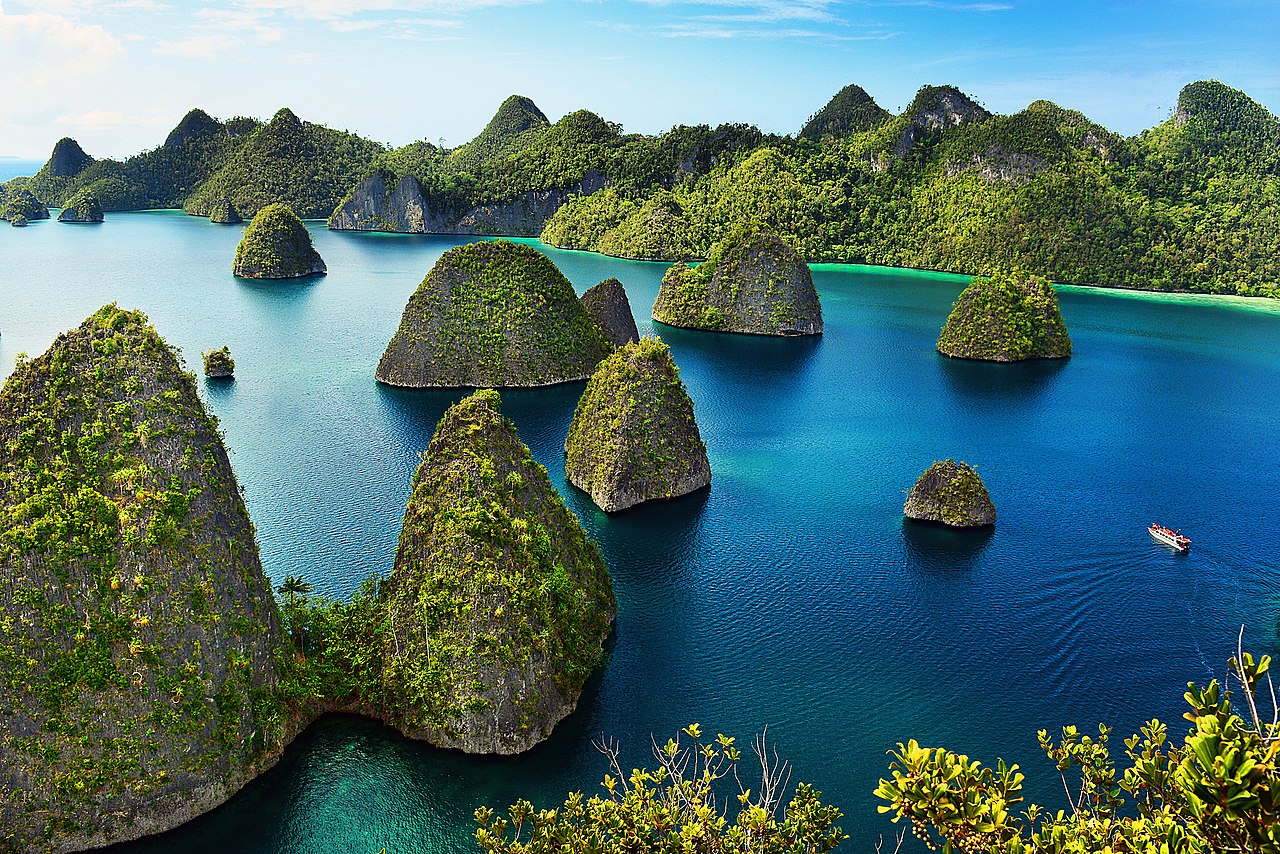
Beyond the war history, Biak has decent beaches and snorkeling, notably around Bosnik and the Padaido Islands just offshore, which see far fewer visitors than Raja Ampat despite comparable reef quality in parts. The island also functions as a transit hub for onward travel into other parts of northern Papua, and its airport was historically significant as a refueling stop on trans-Pacific routes.
Biak FAQs
Yes, strongly recommended — Goa Binsari has no lighting or marked paths, and a local guide (arranged through your hotel) knows the safe routes and can explain what you're looking at.
It's a step down in reef density and marine biodiversity, but the Padaido Islands offer solid, uncrowded snorkeling and diving at a fraction of the logistics and cost of reaching Raja Ampat.
It works as an air transit point given its airport, but it's not centrally located for places like Wamena or Raja Ampat, which require separate flights, often via Jayapura or Sorong.
Yes, the island has some known but rarely surfed breaks; equipment isn't available for rent locally, so serious surfers bring their own boards.
A hired car or motorbike with a driver who knows the sites is essential, since many wrecks sit off unmarked tracks that aren't on standard maps.
More in Papua




Reviews/Comments
No comments yet — be the first.