Raja Ampat
Raja Ampat, off the western tip of Papua, is widely regarded by marine scientists as having the richest coral reef biodiversity on Earth — over 1,500 fish species and 75% of the world's known coral species have been recorded in its waters, a concentration found nowhere else.
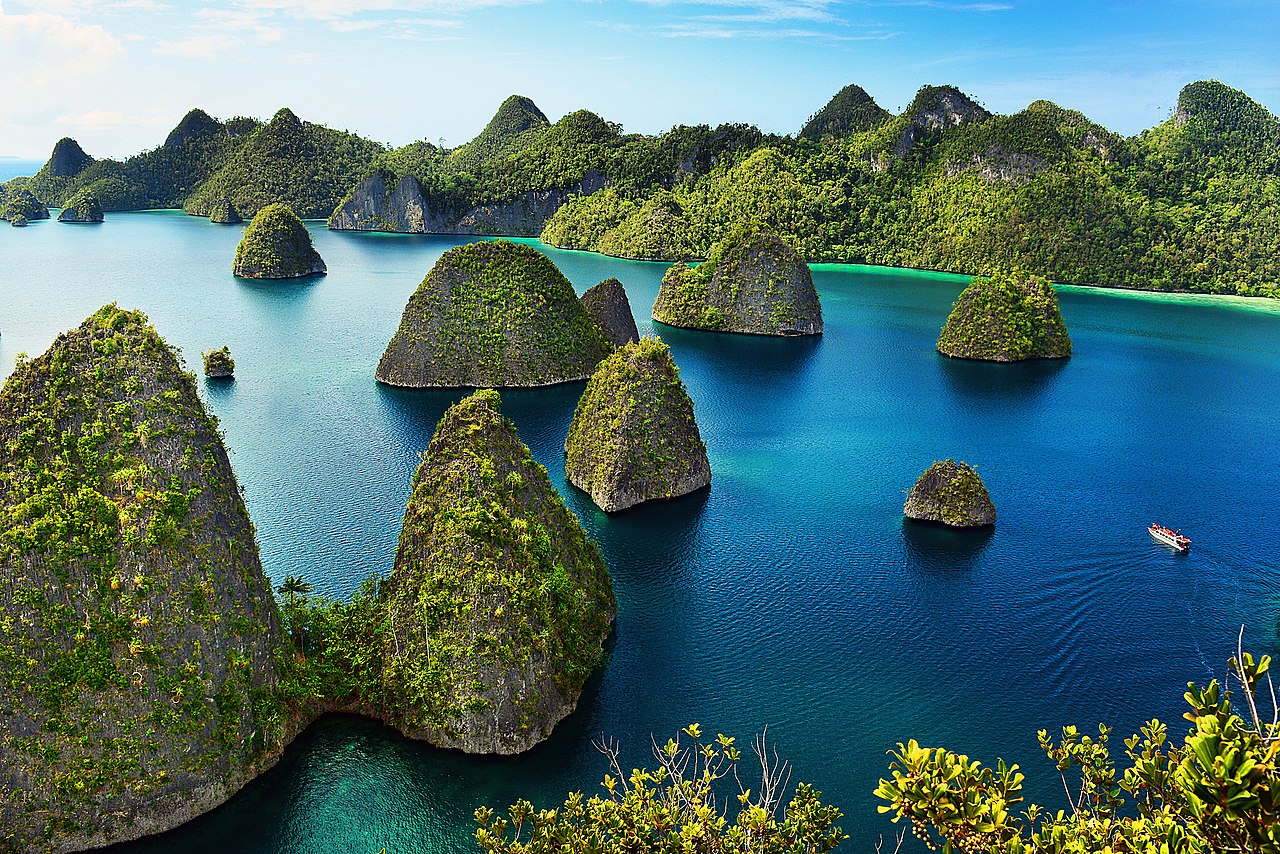
Above the waterline, the archipelago is just as visually striking: karst limestone islands rising sharply from turquoise water, best seen from above at viewpoints like Piaynemo, which has become one of Indonesia's most recognizable images despite the difficulty of actually getting there.
Most visits center on diving or snorkeling, either from a land-based homestay/resort or a multi-day liveaboard boat that moves between dive sites — the latter is the more common way serious divers experience the region's full range, since many of the best sites are hours apart by boat.
This is a genuinely remote, high-cost destination relative to the rest of Indonesia, reflecting both the logistics of reaching it and a deliberate local conservation fee structure aimed at limiting overtourism to protect the reefs. October-April is generally considered the better window for calmer seas and visibility, though conditions vary by specific site.
Piaynemo is the karst viewpoint behind Raja Ampat's most iconic photograph — a cluster of jungle-covered limestone islands scattered across turquoise water, seen from a wooden staircase climb to an elevated lookout. The climb itself is short but steep, several hundred wooden steps up a limestone outcrop, rewarded by the panoramic view that's become the singular image most associated with Raja Ampat. Most visitors combine the viewpoint with snorkeling in the surrounding lagoon and channels, since the same karst topography that makes the view dramatic also creates sheltered, clear-water channels good for snorkeling right nearby.
Waisai is Raja Ampat's administrative hub and the practical gateway for anyone arriving overland-and-by-boat rather than by liveaboard — it's where the marine park entry permit is issued, where most inter-island boats are chartered, and where basic supplies (fuel, food, cash) are the last reliably available before scattering out to the homestays on Gam, Mansuar, Kri, and other islands. The town itself has little to detain visitors beyond these logistics; it's a functional base rather than a destination. Most travelers spend one night in Waisai on arrival to sort out permits and boat transport, then move on to homestays closer to the reefs, returning only if a flight or ferry connection requires it.
Raja Ampat FAQs
Yes, among Indonesia's pricier destinations, reflecting both the remote logistics of reaching it and a local conservation fee aimed at limiting overtourism.
No — snorkeling from the surface is also excellent given the shallow reef biodiversity, and the karst island scenery above water is worth the trip on its own.
Fly to Sorong (via Jakarta or Makassar), then take a ferry or speedboat to the main hub of Waisai, followed by boat transfers to specific islands or dive sites.
A liveaboard covers more dive sites across a wider area; a land-based homestay or resort is more relaxed and better suited to non-divers who still want to snorkel and explore.
October-April generally offers calmer seas and better visibility, though conditions can vary by specific site.
Things to do in Raja Ampat

Reviews/Comments
No comments yet — be the first.