
Ubud
Ubud is Bali's cultural heart, set among rice paddies and jungle. Come for temples, yoga, art markets, monkey forest, waterfalls, and the Campuhan Ridge Walk. It's also a base for day trips to Tegallalang, Gunung Kawi, and Tirta Empul. Most travelers spend 3–4 days.
Ubud earned its reputation as Bali's wellness and arts capital long before Eat, Pray, Love put it on the map — the town itself is compact and walkable, ringed by working rice paddies, and its main streets (Jalan Raya Ubud, Monkey Forest Road, Hanoman) are lined with galleries, yoga studios, and warungs rather than beach bars. It's the quietest, most contemplative base on the island, and the one most travelers pair with a few days on the coast rather than choose exclusively.
The rice terraces at Tegallalang and Jatiluwih are Ubud's most photographed sights, cut into the hillsides using the traditional subak irrigation system — a UNESCO-recognized method of water-sharing between farmers that's centuries old. Just outside town, Goa Gajah's 9th-century carvings, the holy spring at Tirta Empul, and the royal tombs at Gunung Kawi are all within a 20–30 minute drive, close enough to combine into a single day.
Ubud's wellness scene is genuinely deep, not just a marketing label — daily yoga classes, traditional Balinese healers, and multi-day retreat centers operate alongside a serious food scene built around Indonesian and health-focused menus. The Ubud Art Market and the weekend organic market are good for handicrafts and produce respectively, and the town's gallery scene (Blanco Renaissance Museum, Neka Art Museum, ARMA) is the most concentrated on the island.
Most sights charge a small entrance fee (typically 20,000–50,000 IDR) — Tegallalang, the Monkey Forest, and Tirta Empul all do — and Tegallalang in particular is best visited before 8am, since it's a stop on nearly every organized day-tour route out of the south and gets crowded by mid-morning. Ubud has no beach of its own; travelers wanting both should plan it as one leg of a multi-base trip rather than a single stay.
Campuhan Ridge Walk: The Campuhan Ridge Walk is a roughly 2-3km paved path along a grassy ridge just outside central Ubud, offering open views over the surrounding valley without requiring a car or guide — genuinely one of Ubud's best free activities. The walk starts near the confluence of two rivers (campuhan means "where waters meet") beside a small temple, then climbs gently along the ridgeline. Because it's flat, well-maintained, and free, this has become one of Ubud's most popular walks for both visitors and expats doing a regular morning routine — busiest at sunrise and late afternoon, when the light and temperature are both at their best.
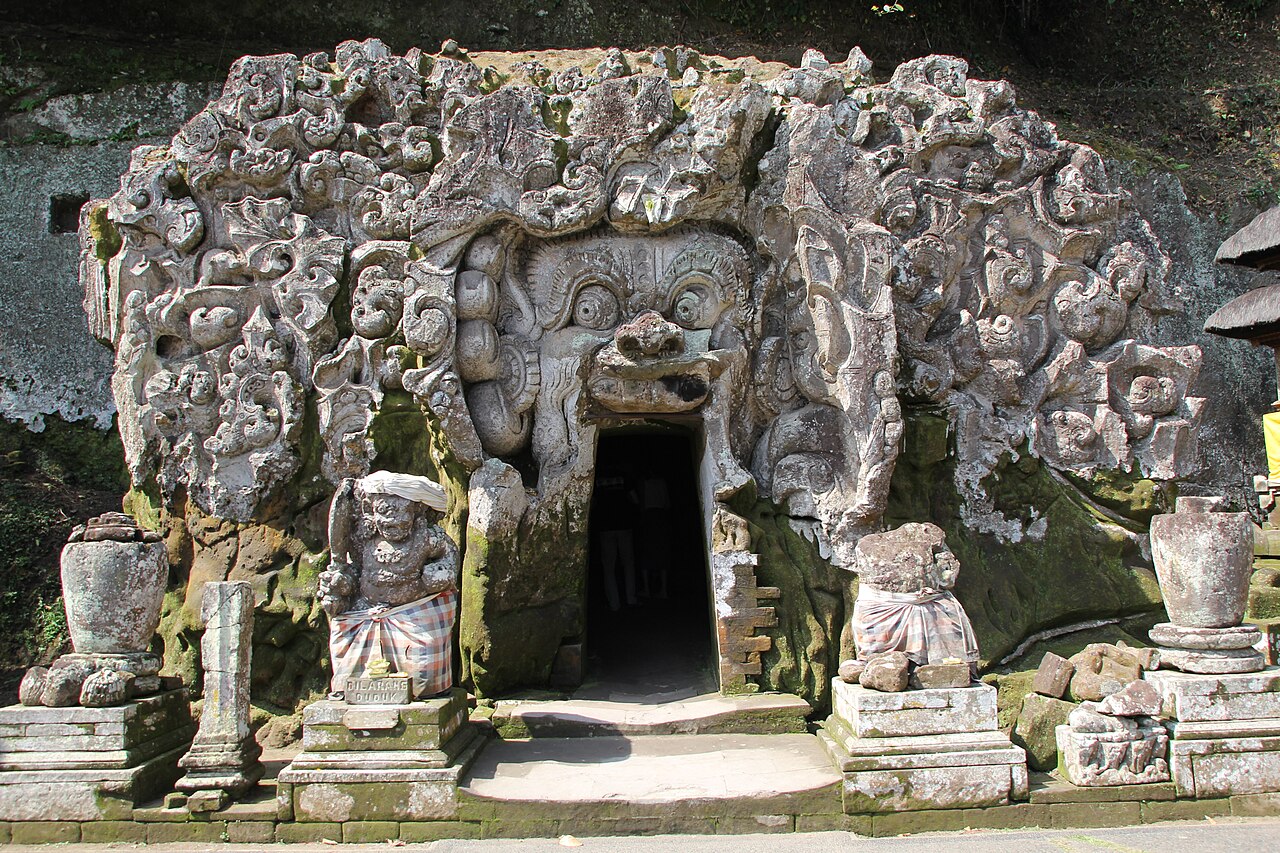
Goa Gajah — the "Elephant Cave" — takes its name not from elephants but most likely from the nearby Petanu River's old name, or from the fearsome demon face carved into the cave's entrance, which some early visitors read as elephant-like. The carving itself, all gaping mouth and clawed hands framing the doorway, is the site's most striking single feature and predates most of Bali's better-known temples, with origins going back to the 11th century as a meditation site blending Hindu and Buddhist elements. Inside, the cave is small and unassuming — a short T-shaped passage with weathered stone niches — which surprises visitors expecting something larger after the dramatic entrance. The real draw beyond the cave itself is the bathing pool complex just outside, with carved fountain figures still standing after centuries, plus a set of Buddhist stupa fragments in the surrounding gardens that mark this as one of the few sites in Bali showing the two religious traditions layered together.
Gunung Kawi is a set of 11th-century candi (shrines) cut directly into a river valley's cliff faces, reached by descending a long staircase through rice terraces into the Pakerisan River gorge. The shrines are believed to be memorials to King Anak Wungsu and his queens, carved as niches into the rock rather than freestanding structures, which gives the site a scale and setting unlike Bali's temple complexes elsewhere on the island. The walk down is as much the experience as the shrines themselves — a genuinely scenic descent through terraced rice fields before the valley opens onto the cliff-cut monuments. Fewer tour buses make it here compared to Tirta Empul just up the road, largely because of the stairs, which keeps it markedly quieter.
Kanto Lampo Waterfall: Kanto Lampo is a unique, visually striking waterfall located in Gianyar Regency, roughly 30–40 minutes from Ubud. Unlike traditional tall, plunging falls, Kanto Lampo is characterized by water cascading gently over a staggered, multi-tiered wall of textured rock formations. This natural design allows visitors to climb and sit on the rocky ledges beneath the flowing water, making it highly popular for photos and "shower" experiences. The site is family-friendly but requires descending a set of stairs to reach the river valley. The water flow is generally steady year-round, as the river is not solely dependent on heavy rainfall, though it can become muddy and more powerful during the wet season. Practical details include a small entrance ticket fee (with separate parking fees for scooters and cars) and on-site amenities such as changing rooms, toilets, and small local shops. Because it is relatively easy to access and extremely photogenic, the waterfall can get very crowded, so it is best to visit early in the morning. While swimming isn't suitable due to the shallow, rocky basin, visitors can wade and explore the water safely with caution on the slippery rocks. Kanto Lampo Waterfall is a cascading waterfall over rocks near Gianyar, popular for photos.
Tegallalang Rice Terraces: Tegallalang is Bali's most famous rice terrace, a steep hillside of stepped paddies farmed using the traditional subak irrigation system — a centuries-old cooperative water-management practice recognized by UNESCO as part of Bali's cultural landscape. The terraces are still actively farmed, which is part of the appeal: this isn't a preserved museum piece but a working landscape that happens to be extraordinarily photogenic. The roadside above the terraces has become heavily commercialized, lined with cafes, souvenir stalls, and paid swing/photo installations built specifically to capitalize on the view — worth knowing going in, since the experience today is as much about navigating that tourist infrastructure as it is about the rice terraces themselves.
Tegenungan Waterfall: Tegenungan is one of the most accessible and most visited waterfalls near Ubud — wide, tall, and easy to reach via a paved staircase down from the parking area, which is exactly why it draws heavier crowds than more remote falls further afield. Swimming is possible in the pool at the base, and the falls' width makes for one of Bali's more dramatic waterfall photos without requiring a strenuous hike. Because of the easy access, this is often the first (and sometimes only) waterfall visitors near Ubud see — worth knowing that quieter, less-developed alternatives exist further out if the crowds here feel like too much.
Tirta Empul is Bali's most active water temple, built around a natural spring that Balinese Hindus believe was created by the god Indra and still use today for melukat — ritual purification. A long row of carved spouts channels the spring water into a bathing pool where locals and visitors alike wade in to bathe under each spout in sequence, a genuine living ritual rather than a photo op, even though it has become one of Bali's most photographed sites. The temple complex extends well beyond the pools — courtyards, shrines, and a separate royal bathing area historically reserved for Balinese kings — but the purification pools are what draw the crowds, and they draw them early: arriving before 9am is the real difference between a quiet, respectful visit and standing in a queue with a hundred other tourists holding phones.
Tukad Cepung Waterfall: Tukad Cepung is a narrow canyon waterfall known for a specific lighting effect: a shaft of sunlight breaking through the gorge's opening and hitting the falling water, an effect that only appears around midday on clear days and has made this one of Bali's most Instagrammed waterfalls as a result. The approach itself — wading along a shallow river between narrow rock walls — is part of the appeal, distinct from the roadside-viewpoint waterfalls found elsewhere on the island. Because the good light is time-dependent, arriving outside the midday window (or on an overcast day) means missing the effect the falls are known for — worth timing deliberately rather than treating this as a stop on the way to somewhere else.
Ubud Monkey Forest: The Sacred Monkey Forest Sanctuary is a forested temple complex home to several hundred long-tailed macaques, functioning simultaneously as a working Hindu temple site, a conservation area, and Ubud's most visited single attraction. Three temples sit within the forest, dating to the 14th century, and the sanctuary is managed jointly by the local village, giving it a genuine community stake rather than being a purely commercial zoo-style attraction. The monkeys are the main draw and the main hazard in equal measure — they're habituated to visitors and will grab sunglasses, water bottles, or food without hesitation, so the practical advice (don't carry loose valuables, don't make direct eye contact, don't hold food visibly) matters more here than at almost any other Bali site.
Ubud FAQs
3-5 days covers the town, Monkey Forest, nearby temples, and the surrounding rice terraces at a relaxed pace.
Yes, it's Bali's main hub for yoga retreats, wellness centers, and healthy-eating cafes.
Central Ubud is walkable, but a scooter or driver is useful for reaching nearby temples, waterfalls, and rice terraces.
The central area (Monkey Forest Road, the market) can feel busy, but it's easy to find quieter spots just outside the center.
It's inland, cultural, and artistic rather than beach-focused — rice terraces, temples, and galleries instead of surf and beach clubs.
Things to do in Ubud



Reviews/Comments
No comments yet — be the first.