Goa Gajah
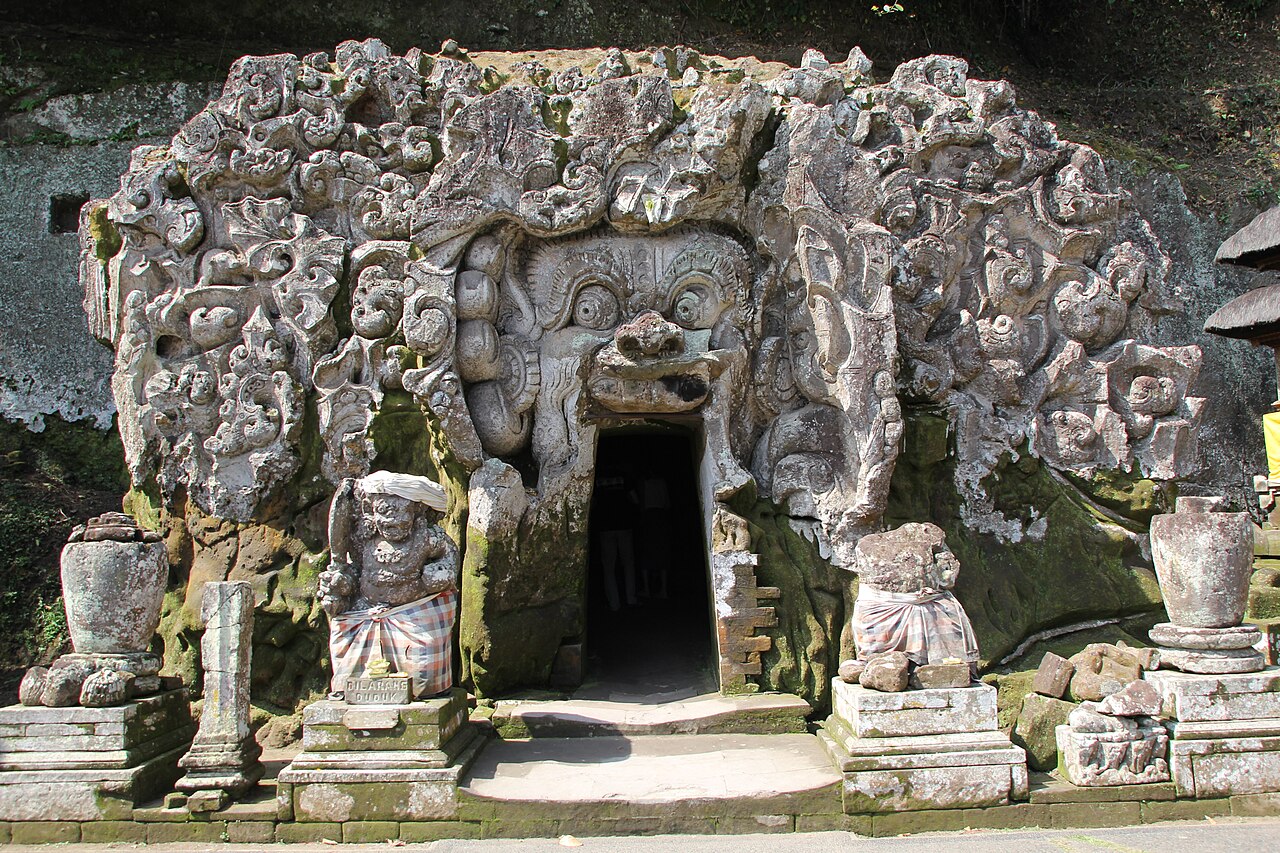
Goa Gajah — the "Elephant Cave" — takes its name not from elephants but most likely from the nearby Petanu River's old name, or from the fearsome demon face carved into the cave's entrance, which some early visitors read as elephant-like. The carving itself, all gaping mouth and clawed hands framing the doorway, is the site's most striking single feature and predates most of Bali's better-known temples, with origins going back to the 11th century as a meditation site blending Hindu and Buddhist elements.
Inside, the cave is small and unassuming — a short T-shaped passage with weathered stone niches — which surprises visitors expecting something larger after the dramatic entrance. The real draw beyond the cave itself is the bathing pool complex just outside, with carved fountain figures still standing after centuries, plus a set of Buddhist stupa fragments in the surrounding gardens that mark this as one of the few sites in Bali showing the two religious traditions layered together.
Goa Gajah FAQs
About 45 minutes to an hour, including the bathing pools and gardens — the cave itself is small.
The entrance carving is the highlight; the cave interior is a modest, narrow space, so don't expect an extensive underground complex.
Yes, sarongs are required (and provided/rented) as at any Balinese temple site.
Yes — Tegenungan Waterfall, Tirta Empul, and Gunung Kawi are all within a short drive and commonly combined into one day.
It sees steady tour traffic but isn't overwhelming; mornings are calmer than midday.
More in Ubud


Reviews/Comments
No comments yet — be the first.