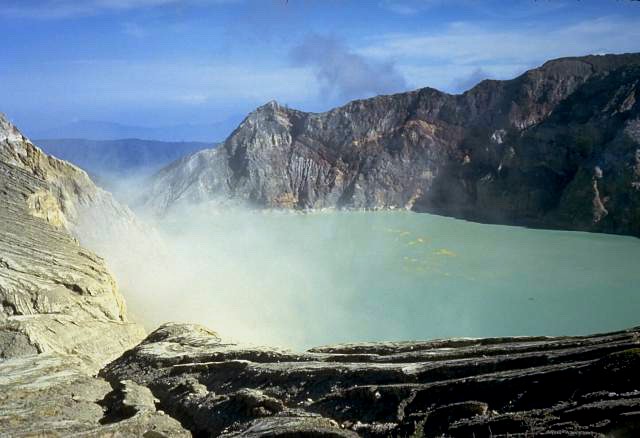
Kawah Ijen
Kawah Ijen is famous for two things: the turquoise, highly acidic crater lake — the largest of its kind in the world — and the electric-blue flames that ignite from sulfuric gas at night, visible only in the dark hours before dawn. Getting to see the blue fire means a demanding pre-dawn hike in the cold and dark, often alongside sulfur miners hauling loads of raw sulfur out of the crater by hand, a genuinely brutal job that's part of what makes a visit here sobering rather than purely scenic.
Gas masks are usually provided or rentable near the entrance because sulfur fumes can be overwhelming and occasionally the crater closes to visitors when gas levels spike. The hike itself is steep gravel and can be slippery, so this isn't a casual stroll — expect several hours of exertion in the dark for a payoff that depends partly on weather and wind direction cooperating.
Kawah Ijen FAQs
No, the blue flames are only visible in complete darkness, roughly 2am to 4am, which is why tours start at midnight.
Moderately strenuous — about 3km uphill on loose volcanic gravel to the rim, then a steep, sometimes slippery descent into the crater on a narrow trail. Reasonable fitness is needed.
Yes, sulfur fumes near the crater can be intense and occasionally close off the descent; rent one at the entrance if your tour doesn't include it.
Yes, park authorities close crater access when gas emissions or weather conditions become dangerous, so factor in some flexibility if visiting during a shorter trip.
Warm layers for the pre-dawn cold at altitude, sturdy closed shoes with grip, and a headlamp since the trail is unlit.
More in Banyuwangi

Reviews/Comments
No comments yet — be the first.