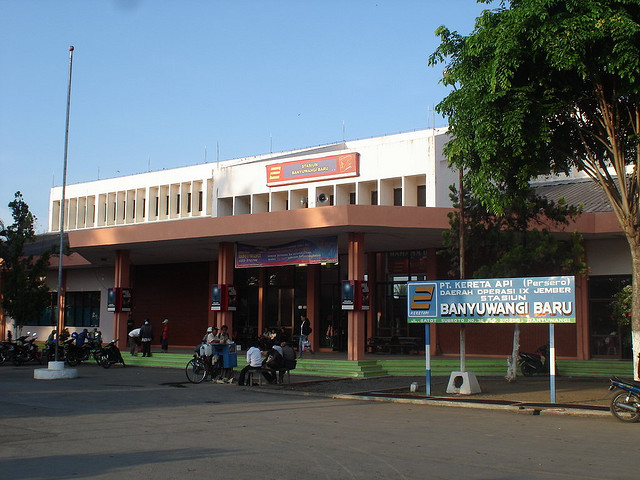
Banyuwangi
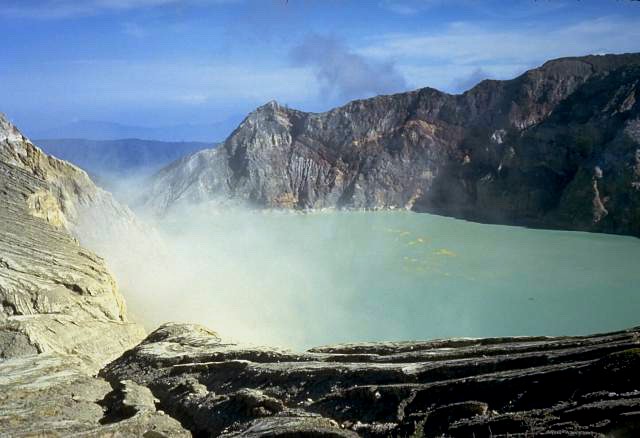
Banyuwangi sits at Java's easternmost tip and is best known as the gateway to Ijen, the volcanic crater famous for its electric-blue sulfuric flames, visible only in the pre-dawn darkness, and for the turquoise, highly acidic crater lake it also holds. Sulfur miners still carry loads of solid sulfur down the crater's steep paths by hand for a living, and passing them on the trail is one of the more sobering aspects of the otherwise spectacular hike.
The town itself is a modest, unpretentious transit point rather than a destination, mainly used as a base for Ijen and as the ferry crossing to Bali. Beyond the volcano, the surrounding regency has some worthwhile if less-visited spots: Sukamade beach for sea turtle nesting within Meru Betiri National Park, and Plengkung (G-Land) beach, a renowned surf break reached mostly by 4WD or boat and popular with a dedicated surfing crowd.
Baluran National Park: Baluran is nicknamed Indonesia's 'Little Africa' for its wide-open savanna, which is unusual in a country dominated by rainforest. The dry grassland at Bekol and Bama, ringed by Gunung Baluran's dormant volcanic cone, draws wild banteng cattle, deer, and peacocks that are easy to spot from the observation tower, especially at dawn. The park spans several ecosystems in a small area — savanna, mangrove, and a beach at Bama where snorkeling is decent and macaques wander the shoreline. Most people combine a Baluran stop with an early-morning Kawah Ijen trip since they're on the same route, sleeping in Banyuwangi and doing both as long day excursions.
Kawah Ijen is famous for two things: the turquoise, highly acidic crater lake — the largest of its kind in the world — and the electric-blue flames that ignite from sulfuric gas at night, visible only in the dark hours before dawn. Getting to see the blue fire means a demanding pre-dawn hike in the cold and dark, often alongside sulfur miners hauling loads of raw sulfur out of the crater by hand, a genuinely brutal job that's part of what makes a visit here sobering rather than purely scenic. Gas masks are usually provided or rentable near the entrance because sulfur fumes can be overwhelming and occasionally the crater closes to visitors when gas levels spike. The hike itself is steep gravel and can be slippery, so this isn't a casual stroll — expect several hours of exertion in the dark for a payoff that depends partly on weather and wind direction cooperating.
Banyuwangi FAQs
It's an electric-blue glow from burning sulfuric gases, visible only in complete darkness, meaning hikers need to reach the crater in the pre-dawn hours (typically arriving 2-4am) before the flames become invisible in daylight.
It's a moderately strenuous 2-3 hour uphill walk on a rocky path, mostly manageable for reasonably fit hikers, followed by a steep, sometimes gas-choked descent into the crater itself if you want to see the blue fire up close rather than just the rim view.
Yes, sulfur fumes in the crater can be strong and irritating; most tour operators provide or rent basic gas masks, but bringing your own is worth considering if you have respiratory sensitivities.
The Ketapang-Gilimanuk ferry runs continuously and takes about 30-45 minutes, making Banyuwangi the standard land-and-sea route between Java and Bali for those driving or busing rather than flying.
It has some lesser-known draws — Sukamade's turtle nesting beach and the G-Land surf break at Plengkung — but both require significant extra effort and time to reach, so most visitors come specifically for Ijen and treat the rest as optional.
Things to do in Banyuwangi

Reviews/Comments
No comments yet — be the first.