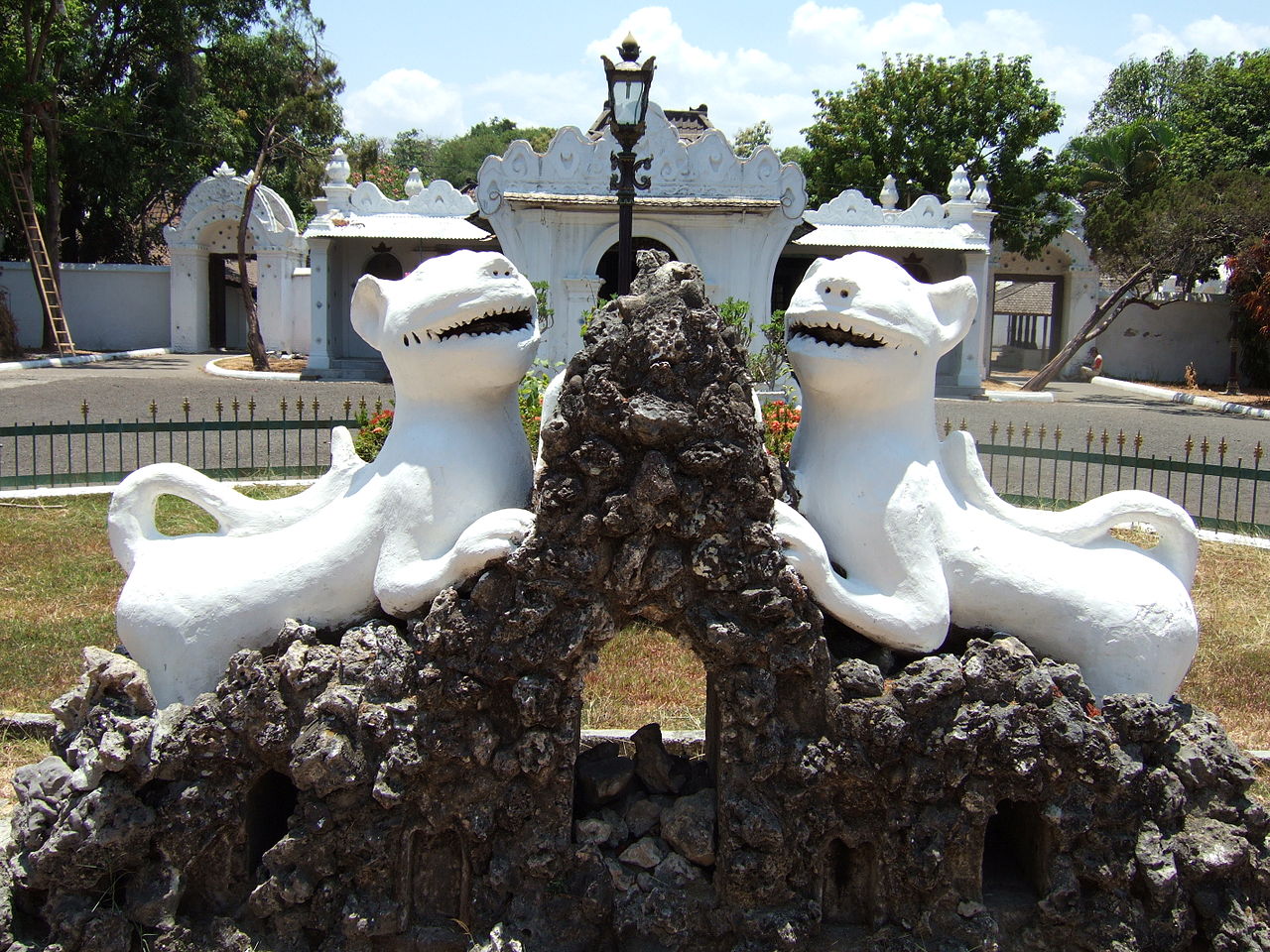
Cirebon
Cirebon sits on Java's north coast at the cultural border between Sundanese West Java and Javanese Central Java, and its history as an old trading port with strong Chinese, Arab, and Islamic influences gives it a distinct identity from either — visible in its cuisine, its batik traditions (Cirebon's mega mendung cloud-motif batik is famous in its own right), and its several keratons (palace complexes), Kasepuhan and Kanoman among them, still home to hereditary sultanate families with royal artifacts on display.
The city is a common stop for travelers moving along Java's northern rail corridor rather than a dedicated destination, but it rewards a day or two with genuinely distinctive food (empal gentong, a rich coconut-based beef soup, is a local specialty) and a look at Java's less-visited royal and Islamic heritage sites, including the Sunan Gunung Jati tomb complex, an important pilgrimage site as the resting place of one of the nine Islamic saints credited with spreading Islam across Java.
Cirebon FAQs
Its distinct mega mendung cloud-pattern batik, several historic keratons (palace complexes) still occupied by sultanate descendants, and a cuisine blending Sundanese, Javanese, Chinese, and Arab influences, reflecting the city's long history as a trading port.
It works well as a one-to-two day stop for travelers on Java's north coast rail route between Jakarta and Central Java, offering distinctive food and heritage sites without needing a special detour.
Kasepuhan and Kanoman are the main palace complexes, still home to hereditary sultanate families, with museums displaying royal artifacts, antique carriages, and Islamic and Hindu-influenced architectural details reflecting the city's blended history.
Empal gentong, a rich coconut-milk beef soup, is the city's signature dish, alongside nasi jamblang (rice served on a teak leaf with an array of side dishes) and seafood reflecting its coastal location.
One of the nine wali songo (saints) credited with spreading Islam across Java; his tomb complex near Cirebon is an important pilgrimage site, drawing visitors from across Indonesia year-round.
More in Java






Reviews/Comments
No comments yet — be the first.