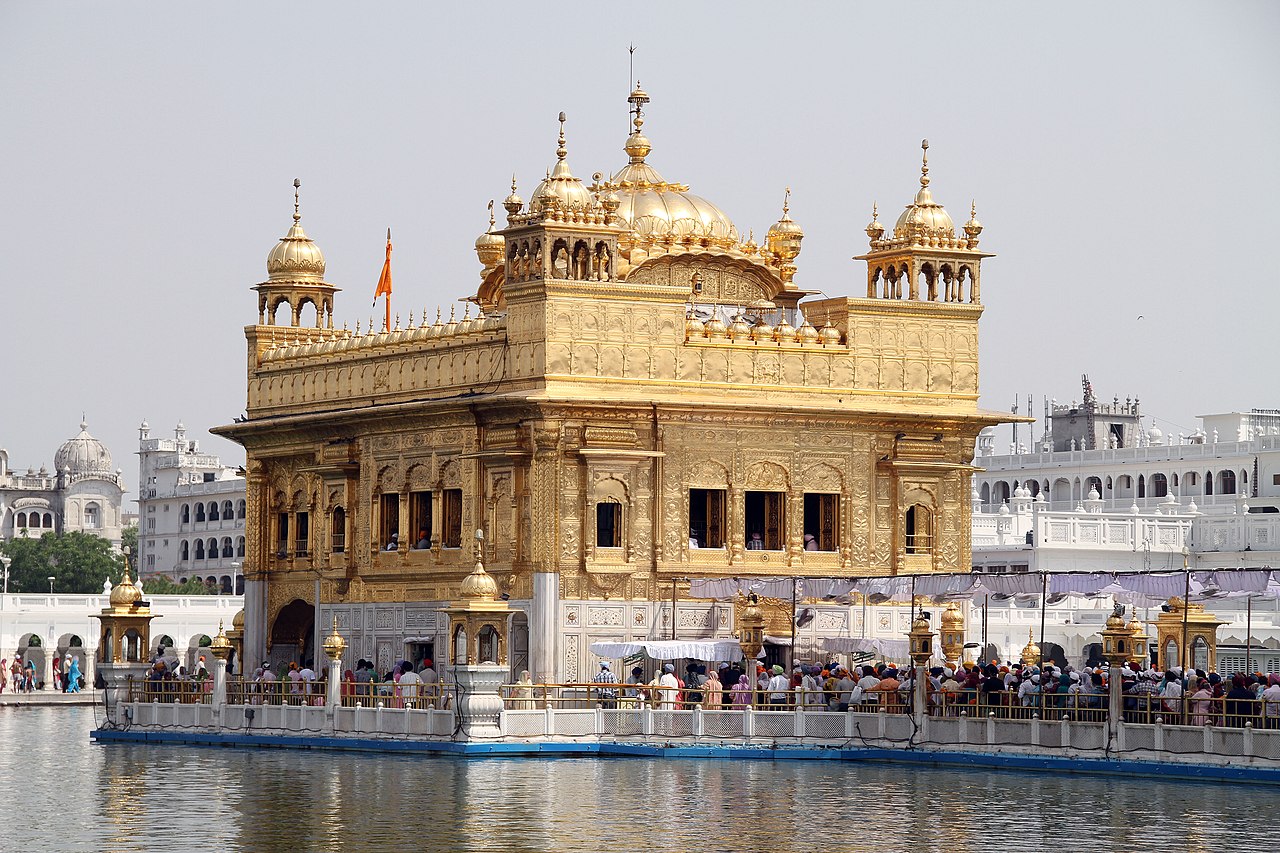
Golden Temple
The Golden Temple (Sri Harmandir Sahib) is Sikhism's holiest site, a gurdwara built in the 16th-17th centuries at the center of the Amrit Sarovar (pool of nectar), with its upper floors gilded in gold leaf added in the early 19th century under Maharaja Ranjit Singh. Unlike most major monuments in India, it's a living, functioning place of worship operating continuously, and that's central to the experience: kirtan (devotional singing) plays through the complex around the clock.
The temple also runs the world's largest free community kitchen, the langar, serving free meals to tens of thousands of visitors daily regardless of religion or background; eating there and helping in the kitchen is genuinely part of the visit, not just a curiosity. Entry requires covering your head (scarves are provided if needed), removing shoes, and washing your feet at the entrance, and it's worth visiting both in daylight and after dark, since the reflection of the illuminated temple on the sarovar at night is one of the most striking sights in India.
Golden Temple FAQs
Yes, it's open 24 hours a day, and many visitors consider the night view, with the gold dome lit and reflected in the sarovar, the most memorable time to see it.
Yes, both men and women must cover their heads inside the complex; scarves are available for free or rental at the entrance if you don't have one.
Yes, the free community kitchen serves anyone regardless of religion, and visitors are welcome to eat and even help with food prep or cleanup.
2-3 hours minimum to see the temple, walk the parikrama (circumambulation path), and eat at the langar; many visitors return for a second visit at a different time of day.
Modest clothing is expected (covering shoulders and knees), and alcohol, tobacco, and non-vegetarian food are not allowed anywhere in the complex.
More in Amritsar


Reviews/Comments
No comments yet — be the first.