
Amritsar
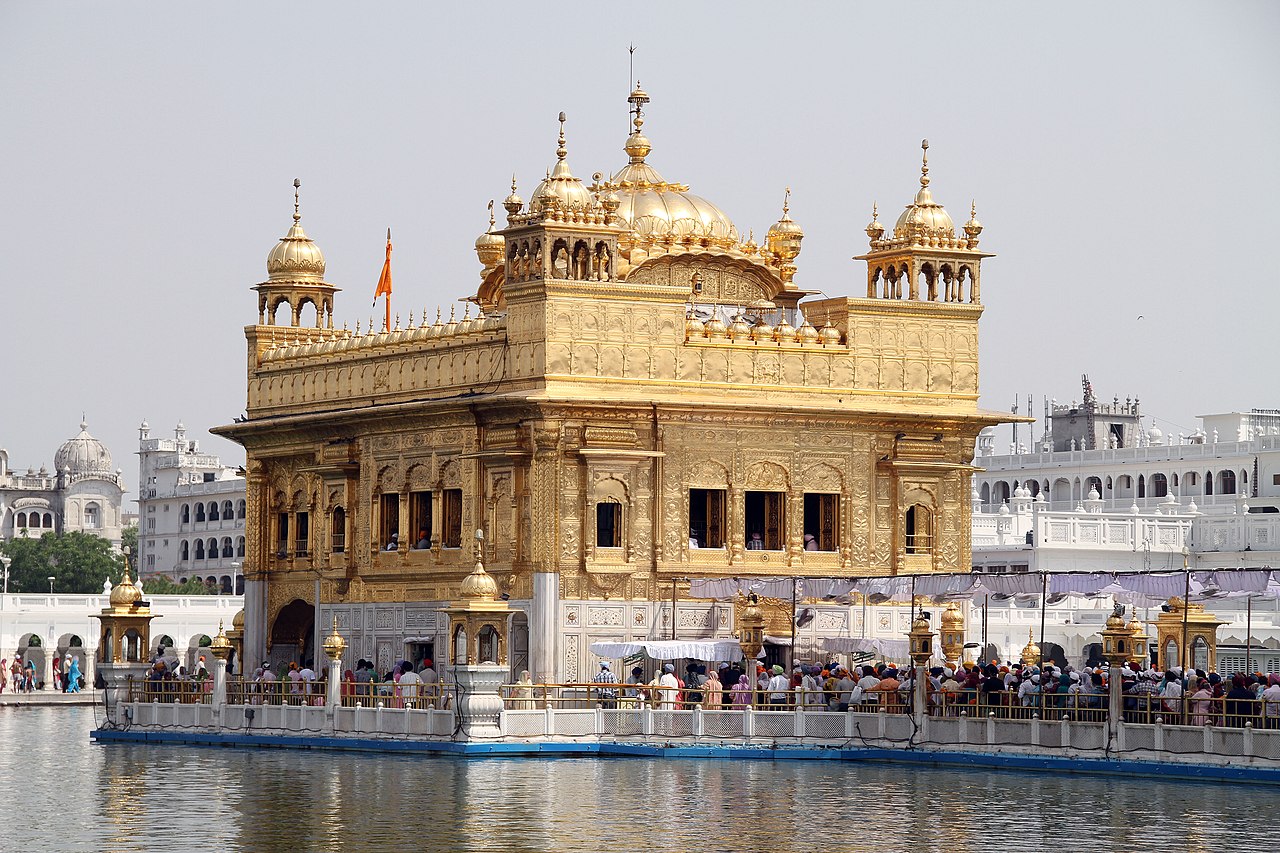
Amritsar is built around the Golden Temple (Harmandir Sahib), Sikhism's holiest site, and the experience of visiting it is unlike almost anything else in India: a marble causeway leads to a gold-plated shrine floating in a sacred pool, open to all visitors regardless of faith, running a free kitchen that feeds tens of thousands of people a day without exception. Visiting after dark, when the temple is lit and reflected in the water, is the single most recommended thing to do here.
Jallianwala Bagh, a walled garden a short walk from the temple, is the site of the 1919 massacre where British troops killed hundreds of unarmed civilians; the bullet-marked walls and the well where people jumped to escape gunfire are preserved as a memorial. It's a sobering counterpoint to the temple's serenity, and most visitors do both in the same walk.
The Attari-Wagah border ceremony, a theatrical, high-kicking flag-lowering face-off between Indian and Pakistani border guards performed nightly to a stadium of cheering spectators on both sides, is genuinely worth the detour despite feeling more like a sporting event than a solemn state occasion.
Food is a major reason to linger: Amritsari kulcha, dal makhani, and lassi here set a benchmark for Punjabi cuisine that's hard to match elsewhere, and the old city's food lanes (particularly around Kesar Da Dhaba) are worth a dedicated evening.
Durgiana Temple is a Hindu temple dedicated to Goddess Durga, built in the 20th century but modeled closely on the Golden Temple's design, complete with a gold-plated dome and a causeway across a surrounding tank. It's sometimes called the "Silver Temple" for the ornate silver-plated doors at its entrance. Because of its visual similarity to the Golden Temple, it's an easy and worthwhile add-on for visitors already in Amritsar, though it draws a fraction of the crowds and has a distinctly Hindu (rather than Sikh) character and ritual practice.
Golden Temple: The Golden Temple (Sri Harmandir Sahib) is Sikhism's holiest site, a gurdwara built in the 16th-17th centuries at the center of the Amrit Sarovar (pool of nectar), with its upper floors gilded in gold leaf added in the early 19th century under Maharaja Ranjit Singh. Unlike most major monuments in India, it's a living, functioning place of worship operating continuously, and that's central to the experience: kirtan (devotional singing) plays through the complex around the clock. The temple also runs the world's largest free community kitchen, the langar, serving free meals to tens of thousands of visitors daily regardless of religion or background; eating there and helping in the kitchen is genuinely part of the visit, not just a curiosity. Entry requires covering your head (scarves are provided if needed), removing shoes, and washing your feet at the entrance, and it's worth visiting both in daylight and after dark, since the reflection of the illuminated temple on the sarovar at night is one of the most striking sights in India.
Jallianwala Bagh is the walled garden where, in 1919, British troops under General Dyer opened fire on an unarmed crowd of civilians attending a peaceful gathering, killing hundreds, a massacre that became a turning point in India's independence movement. The site preserves the bullet-marked walls and the well where many people jumped to escape the gunfire, along with a memorial flame and a small museum documenting the event. It's a somber, quiet counterpoint to the Golden Temple next door, and most visitors combine the two given the short walking distance. The museum adds useful historical context if you're not already familiar with the details of the massacre and its political aftermath.
Partition Museum: The Partition Museum is dedicated to the 1947 Partition of India, the mass displacement and violence that accompanied the creation of India and Pakistan, told largely through oral histories, personal artifacts, and photographs donated by survivors and their families. It's the first museum in the world dedicated specifically to this event. The exhibits are personal and emotionally direct rather than purely academic, focusing on individual stories of loss and migration, which makes for a moving and sometimes difficult visit. Amritsar's location right at the India-Pakistan border, and its history as a major crossing point during Partition, makes the setting especially resonant.
Tarn Taran Sahib is a gurdwara built around the largest sarovar (holy tank) of any Sikh shrine, established by Guru Arjan Dev, the fifth Sikh Guru. It's an important pilgrimage site, especially for its association with healing, historically visited by those seeking recovery from illness, and remains an active center of daily worship and langar. It sees far fewer international tourists than the Golden Temple, so it offers a more local, unfiltered look at gurdwara life and Sikh devotional practice. The scale of the sarovar itself, considerably larger than the one at the Golden Temple, is part of what makes it worth the short trip from Amritsar.
Wagah Border is the official India-Pakistan border crossing near Amritsar, famous for its daily Beating Retreat ceremony, a theatrical, high-energy display of synchronized marching, high kicks, and flag lowering performed by soldiers from India's Border Security Force and Pakistan's Rangers on either side of the gate, with crowds cheering from grandstands on both sides. It's part military tradition, part patriotic spectacle, with loud music, flag-waving, and a genuinely electric crowd atmosphere that surprises many first-time visitors. Security is tight (no bags, and limited phone/camera use in some areas), and seating fills up fast, so arriving early is important if you want a clear view rather than standing at the back.
Amritsar FAQs
Yes, both are required for everyone regardless of religion; head coverings are available free at the entrance if you don't have one, and shoes are checked in at counters.
Yes, it's open to absolutely everyone with no cost and no expectation of donation, though donations are welcome if you'd like to contribute.
About 2-3 hours before the ceremony starts, especially on weekends, since seating fills up fast and foreigners often get a separate faster-track section.
It's possible but rushed; two days lets you also see the Golden Temple at both night and early morning, which are quite different experiences.
Very much so, especially around the Golden Temple where most food is vegetarian by tradition, though the city also has excellent non-vegetarian Punjabi restaurants elsewhere.
Things to do in Amritsar



Reviews/Comments
No comments yet — be the first.