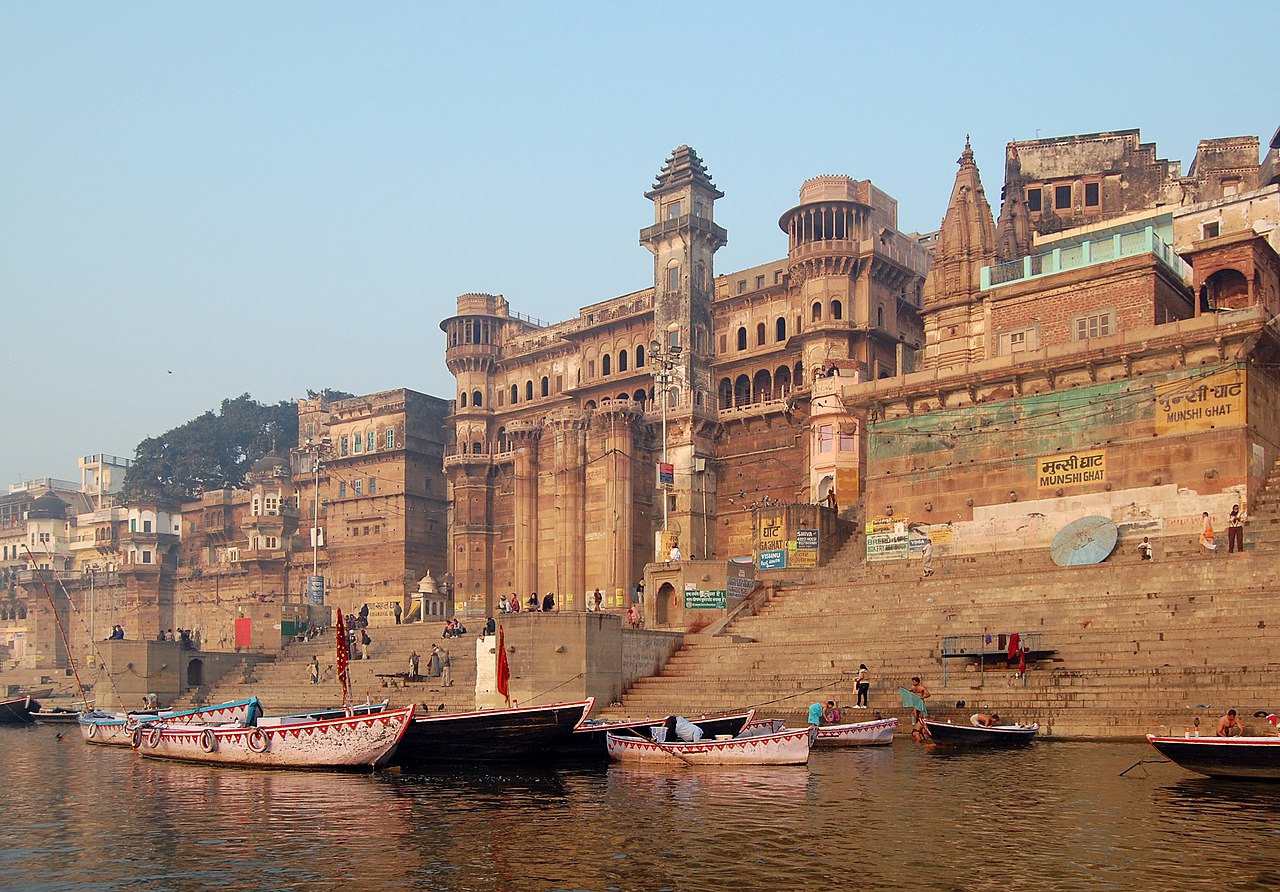
Varanasi
Varanasi is among the oldest continuously inhabited cities in the world and Hinduism's holiest city, built along a curve of the Ganges lined with ghats — stone steps leading into the river — where pilgrims come to bathe away sins and where the dead are cremated in the belief that dying or being cremated here grants moksha, liberation from the cycle of rebirth. Manikarnika and Harishchandra ghats are dedicated cremation sites, and witnessing this openly, respectfully, and without photographing (which is prohibited and considered deeply disrespectful at cremation ghats) is one of the most intense and clarifying experiences many travelers have in India.
The city's spiritual density goes well beyond the ghats: the Kashi Vishwanath Temple, one of the twelve Jyotirlingas, sits at the heart of the old city, rebuilt multiple times after historical destruction and now connected to the riverfront by the recently developed Kashi Vishwanath Corridor, a controversial but significant urban redevelopment that opened up direct pedestrian access from the Ganges to the temple. The old city's narrow lanes (galis) hold countless smaller temples, ancient learning traditions (Varanasi has been a center of Sanskrit scholarship and classical music for centuries), and a genuinely overwhelming sensory intensity of crowds, cows, motorbikes, incense, and ritual.
Beyond the religious core, Varanasi is a working city with a renowned silk-weaving tradition (Banarasi sarees, woven with gold and silver thread, are a recognized craft heritage), and it's the practical base for visiting Sarnath, about 10 km away, where the Buddha delivered his first sermon after attaining enlightenment — a major Buddhist pilgrimage site with a large stupa and museum, offering a completely different, quieter register from the intensity of the ghats.
Varanasi is not an easy destination in the conventional comfort sense — it's crowded, chaotic, and confronts visitors directly with death and devotion in a way few other places do — but this directness is exactly why so many travelers describe it as one of the most profound places they've visited in India. Go with some patience for the sensory overload, and consider a knowledgeable local guide for the old city's lanes and rituals, since context significantly deepens the experience here.
Chunar Fort overlooks the Ganges River from a strategic hilltop position, with a long history spanning Mughal, Afghan, and British control, and it's traditionally associated with the legendary king Vikramaditya, though most standing structures date to later periods. Its riverside position and layered military history give it a distinctive character among Uttar Pradesh's forts, with sweeping views over the Ganges. It's a quieter, less-visited alternative to Varanasi's ghats and temples, appealing to those wanting a change of pace with some genuine historical and scenic interest during an extended Varanasi stay.
Dashashwamedh Ghat is Varanasi's most important and busiest ghat, best known for its nightly Ganga Aarti, an elaborate, choreographed ritual of fire, chanting, and incense performed by a line of priests facing the river, drawing large crowds of both pilgrims and tourists every evening. By day, it's a hub of boat rides, pilgrims bathing, and vendors, giving a full sense of the ghat's role in daily religious life along the Ganges. Watching the aarti from a boat on the river, rather than from the crowded ghat steps themselves, is a popular and often recommended way to experience the ceremony with a bit more space and a better overall view.
Kashi Vishwanath Temple is one of the most important Shiva temples in India, one of the twelve Jyotirlinga shrines considered especially sacred, and it sits at the heart of Varanasi's religious identity as one of Hinduism's holiest cities. The temple has been rebuilt multiple times through history following destruction, and its current gold-plated dome dates to a 19th-century renovation funded by Maharani Ahilyabai Holkar; a major redevelopment corridor project in recent years has significantly expanded and modernized the approach connecting the temple directly to the Ganges ghats. Given its significance, security is tight and queues can be extremely long, especially during major festivals and pilgrimage seasons, so plan for a substantial time commitment. It's usually visited together with a walk along the nearby ghats, given the temple's direct pedestrian corridor connection to the riverside.
Manikarnika Ghat is Varanasi's principal cremation ghat, where Hindu funeral rites are performed continuously around the clock, based on the belief that dying and being cremated in Varanasi grants moksha (liberation from the cycle of rebirth). It's one of the most visually and emotionally striking sights in the city, with funeral pyres burning in full public view along the riverbank. Visitors are generally permitted to observe respectfully from a distance, but photography of the cremations themselves is strictly prohibited and considered deeply disrespectful. Locals sometimes offer to guide visitors closer for a donation toward the wood or the ghat's charitable functions, a practice worth approaching thoughtfully and with awareness that some of these approaches can be opportunistic.
Ramnagar Fort is the ancestral residence of the Maharaja of Varanasi (Kashi Naresh), built in the 18th century in a mix of Mughal architectural styles, and it remains partly occupied by the royal family, with a section open as a museum displaying vintage cars, weapons, royal costumes, and an unusual astronomical clock. Its location directly across the Ganges from the main ghats gives it a distinctly different vantage point on the city. The museum shows some wear and isn't as polished as some other royal museums in India, but the eclectic collection and the fort's ongoing connection to Varanasi's traditional royal family give it real historical character, particularly for visitors interested in the region's more recent (post-Mughal) history.
Sarnath is where the Buddha delivered his first sermon after attaining enlightenment, making it one of Buddhism's four most important pilgrimage sites, alongside Bodh Gaya, Kushinagar, and Lumbini. The site includes the Dhamek Stupa, a large cylindrical brick and stone structure marking the spot of the sermon, along with monastery ruins, an Ashokan pillar (whose four-lion capital became India's national emblem), and an archaeological museum housing significant Buddhist sculpture. Given its proximity to Varanasi and its distinct religious and historical character, a quieter, more contemplative counterpoint to the intensity of the ghats, Sarnath is a natural half-day trip from the city, appealing to visitors interested in Buddhist history regardless of their primary religious background.
Varanasi FAQs
No, photography at Manikarnika and Harishchandra cremation ghats is prohibited and considered deeply disrespectful; you can observe respectfully from a distance, ideally with a local guide who can explain the rituals, but put the camera away.
Sunrise, roughly 5:30-7am depending on season, is the classic time, showing the ghats in the day's first light; an evening ride timed to the Ganga Aarti at Dashashwamedh Ghat is the other essential option.
It's intense — crowded, chaotic, and confronting in its openness about death and ritual — but it's also well set up for tourism with guides, boats, and accommodation across all budgets; going with some patience and, ideally, a local guide for the old city makes a significant difference.
About 10 km, roughly 30 minutes by road; it's a genuinely significant Buddhist pilgrimage site marking where the Buddha delivered his first sermon, and its calm, museum-and-stupa atmosphere offers a good contrast to the intensity of the ghats.
Banarasi silk sarees, woven with gold and silver thread, are the city's signature craft — buy from an established shop or directly from weavers if possible, since quality and authenticity vary widely among tourist-facing sellers.
Things to do in Varanasi


Reviews/Comments
No comments yet — be the first.