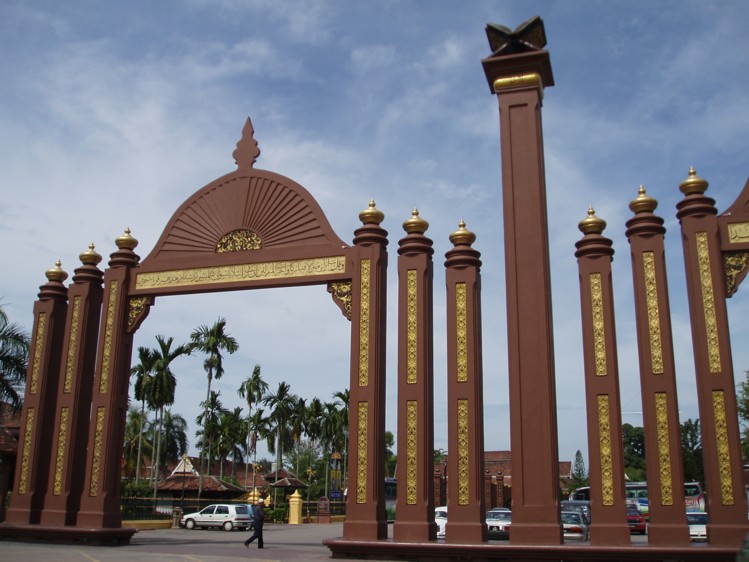
Kota Bharu
Kota Bharu is the cultural heart of Kelantan, a state that holds onto traditional Malay identity more tightly than almost anywhere else in the country - batik and songket weaving, wau (giant kite) making, silat, and wayang kulit shadow puppetry are still practiced here, not staged for tourists. The Central Market (Pasar Besar Siti Khadijah) is the best reason to come: a two-story hive run almost entirely by women traders selling dried fish, batik, kain songket, and Kelantanese sweets, with a rhythm closer to a working market than a tourist attraction.
Most visitors pass through Kota Bharu on the way to the Perhentian Islands rather than staying for its own sake, and that's a reasonable way to use it - a night here lets you see the handicraft villages around town (Kampung Kraftangan for batik and silverwork) and sample Kelantanese food, which leans sweeter and more herbal than food elsewhere in Malaysia (nasi kerabu, ayam percik, laksam). The state's conservative character is worth knowing before you arrive: alcohol is hard to find and mostly limited to a few Chinese-run shops, and the town's rhythm follows Friday prayers rather than a Western weekend.
Kota Bharu FAQs
It's a common stopover since Kuala Besut jetty is about an hour away, but most travelers spend one night here at most before heading to the islands - there's not enough to justify longer unless you specifically want the market and craft culture.
It's difficult. Kelantan is governed under conservative Islamic policy and alcohol sales are restricted mostly to a handful of Chinese-run coffee shops and grocery stores; don't expect bars or easy availability at restaurants.
Nasi kerabu (blue rice with herbs and dried fish), ayam percik (grilled coconut-marinated chicken), and laksam are the Kelantanese specialties worth seeking out, distinct from what you'll find elsewhere in Malaysia.
Kelantan (like Terengganu) observes a Friday-Saturday weekend rather than the national Saturday-Sunday standard, aligning the rest day with Friday prayers - plan around Friday closures accordingly.
Yes if you have the time - mornings are for produce and daily shopping with a working-market feel, while evenings bring a different mix of prepared food stalls, so the two visits feel genuinely different.
More in East Coast Islands


Reviews/Comments
No comments yet — be the first.